Introduction
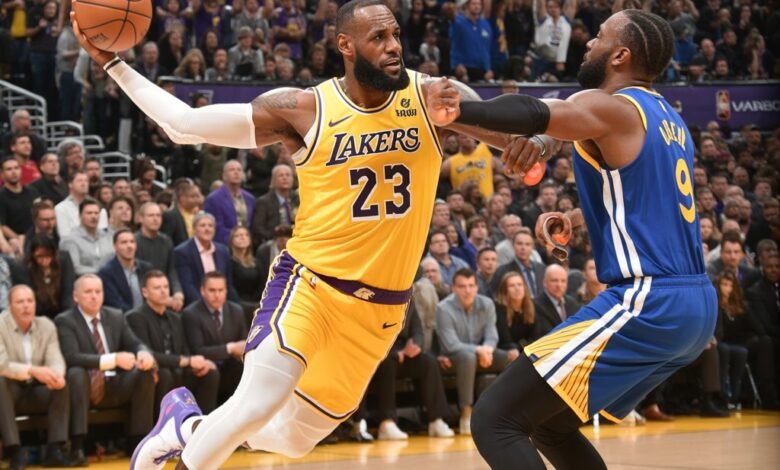
If you follow the NBA, there is one matchup that always stops you mid-scroll. Lakers vs Warriors has that effect on people. It pulls you in whether you are a hardcore basketball fan or someone who just checks scores on your phone.
These two franchises have built one of the most electric rivalries in professional basketball. It does not matter if the season title is on the line or not. When Los Angeles faces Golden State, something real is always at stake.
In the 2025-26 season, the rivalry carries even more weight. The Lakers, powered by Luka Doncic and LeBron James, are battling through injuries. The Warriors are fighting just to stay in play-in contention. Yet every time these teams share a court, the game feels bigger than the standings suggest.
This article covers everything you need to know. You will get the full head-to-head history, a breakdown of both rosters, the latest 2025-26 season results, key storylines, and an honest look at where both franchises stand heading into the playoffs.
The Head-to-Head History That Tells Everything
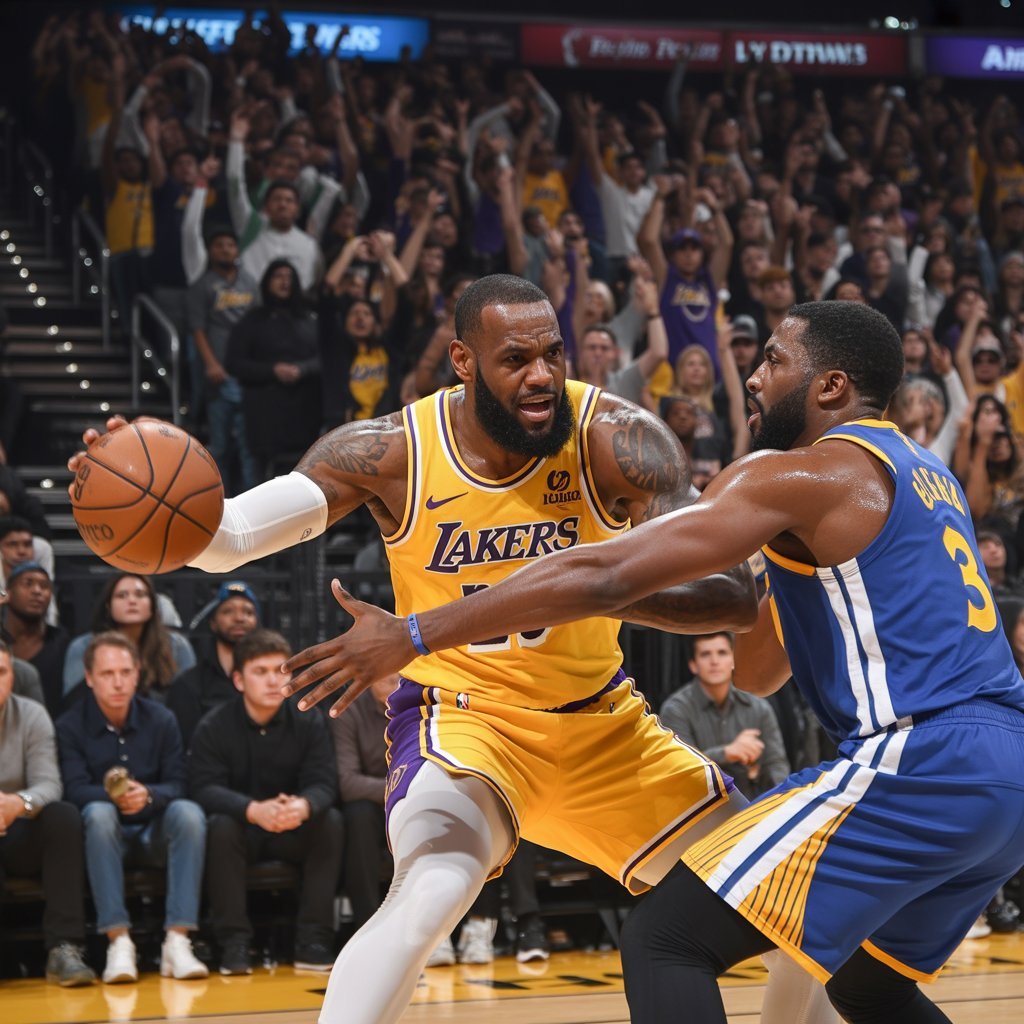
Numbers do not lie, and the all-time record between these two franchises tells a story of Lakers dominance.
The Lakers and Warriors have played a total of 487 games against each other, counting the regular season and playoffs. The Lakers hold an overall record of 296 wins against 191 losses, good for a 60.8% winning percentage.
That is not a close rivalry on paper. But the recent chapter has been far more competitive and far more dramatic.
In the playoffs specifically, the Lakers lead the Warriors 7 series to 1, and they currently hold a 7-series winning streak. In the regular season, the Lakers have won 267 games compared to 178 for the Warriors.
The all-time record leans heavily toward Los Angeles. But what makes this rivalry must-watch television is what happens when both teams are healthy and at full strength.
The Warriors Dynasty Era Changed Everything
For most of NBA history, the Lakers dominated this matchup without much pushback. Then the Warriors dynasty arrived. Between 2015 and 2019, Golden State won four championships and reshaped the entire league. Stephen Curry, Klay Thompson, and Draymond Green did not just win games. They changed how basketball is played.
The Lakers were rebuilding during most of that era. LeBron James arrived in 2018, and the head-to-head dynamic shifted again. The bubble championship in 2020 reminded everyone that the purple and gold still carries weight.
Curry and James have faced off in the NBA Finals four straight years from 2015 to 2018, with Curry’s Golden State Warriors winning three of those matchups. James’ Cleveland Cavaliers famously mounted a 3-1 comeback to win the 2016 title.
That Finals history adds a personal layer every time these two legends share a court.
The 2025-26 Season: What You Need to Know
This season has been one of the most dramatic in recent memory for both franchises. The Lakers entered the year with huge ambitions. The Warriors entered it hoping to stay relevant.
Lakers: A Team on a Mission Despite Injuries
The Lakers made the boldest move in the offseason by pairing LeBron James and Luka Doncic on the same roster. The basketball world could not stop talking about it. Two of the greatest players of their respective generations, together in Los Angeles.
The 2025-26 Lakers clinched the playoffs for the fourth consecutive season and secured their second consecutive Pacific Division title. They also won 50 games in back-to-back seasons for the first time since the 2009-10 and 2010-11 campaigns.
That is a franchise milestone worth celebrating. But the road to the playoffs has not been smooth.
Luka Doncic is averaging 33.5 points, 7.7 rebounds, and 8.3 assists per game this season. However, he is currently listed as out with a Grade 2 left hamstring strain, and his status for the playoffs remains uncertain.
That injury news is a gut punch for Lakers fans. Doncic has been playing at an MVP level all season. Losing him even temporarily changes everything about L.A.’s playoff ceiling.
Austin Reaves will also miss the rest of the regular season due to a Grade 2 oblique injury, adding to the Lakers’ growing injury concerns. The team has dropped three straight games and suffered a stunning 96-139 defeat to the Oklahoma City Thunder.
Despite the injury chaos, LeBron James keeps showing up. James is averaging 21.4 points, 6.8 assists, and 5.6 rebounds per game this season. He has taken a backseat to Doncic’s brilliance, with 71.4 percent of his baskets now being assisted in March alone.
That selflessness from a four-time MVP and all-time great says everything about his character and his commitment to winning.
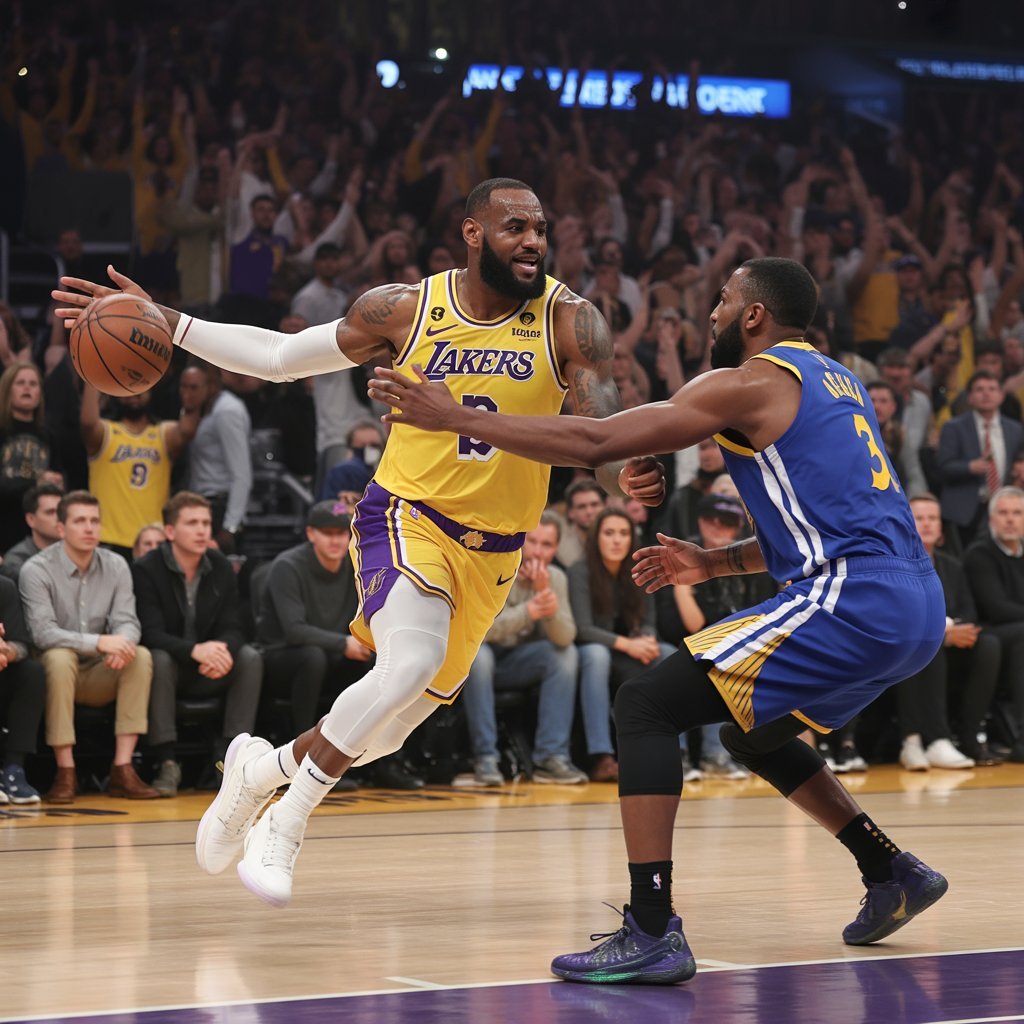
Key Lakers Players to Watch
Here is a quick look at who drives Los Angeles right now:
Luka Doncic averages 33.5 points, 7.7 rebounds, and 8.3 assists per game. He is the engine of everything the Lakers do offensively. When he is on the floor, the offense runs through him completely.
LeBron James remains one of the most complete players in the league even at 41. He finds ways to impact the game even when his scoring role shrinks.
Austin Reaves has been a revelation. Reaves is averaging career highs in points (23.5) and rebounds (4.8) in 2025-26. His scoring average is the highest by an undrafted player since Moses Malone averaged 23.8 in 1985-86. Unfortunately, his oblique injury clouds his playoff availability.
Deandre Ayton and Rui Hachimura round out a rotation that has enough depth to compete, even shorthanded.
Warriors: Battling Through a Brutal Injury Season
If the Lakers are dealing with injury problems, the Warriors are living through a full-on crisis.
Golden State currently has as many as 10 players on their injury report at various points this season. Jimmy Butler suffered a season-ending torn ACL, while Moses Moody was diagnosed with a torn patellar tendon in his left knee. Kristaps Porzingis and Al Horford are also out.
That is a devastating list for any franchise to absorb. The Warriors have leaned on Draymond Green and their few remaining healthy veterans to stay afloat.
Stephen Curry has also battled through setbacks this season, missing time with quad and ankle injuries before a knee issue sidelined him further. Despite the injury-riddled year, Curry averaged 27.2 points per game with strong shooting percentages before his latest absence.
The Warriors sit at 37-42 on the season and have already clinched a play-in tournament berth. They will need a strong run just to earn a first-round playoff spot.
The difference between the two franchises this year is stark. The Lakers are legitimate contenders. The Warriors are a proud franchise fighting to stay relevant.
Key Warriors Players to Watch
Stephen Curry remains one of the greatest shooters in basketball history. He is averaging 27.0 points, 3.5 rebounds, and 4.8 assists in the 2025-26 season at 46.8 percent from the field and 39.2 percent from three. Even at 37, he produces at an elite level.
Draymond Green provides defensive intensity, veteran leadership, and the kind of disruptive energy that makes opposing coaches uncomfortable. He is the emotional core of Golden State.
Brandin Podziemski has stepped up in a bigger role with so many stars injured. He is one of the more promising young players in the Western Conference.
The April 9, 2026 Game: Lakers Win Without the Stars
The most recent chapter of this rivalry played out on April 9, 2026, at Chase Center in San Francisco.
The Los Angeles Lakers dominated the Golden State Warriors at Chase Center, securing a 119-103 victory. With Stephen Curry sidelined, the Warriors struggled to find offensive rhythm and shot poorly throughout the night.
LeBron James delivered 26 points, 11 assists, and eight rebounds but did not get to compete against his longtime rival Curry, who sat out with a knee injury.
That is the bittersweet reality of this rivalry right now. Two legends who have defined an era of basketball could not even share the court for what may be their final regular season meeting this year.
Curry being ruled out for the game meant he would not face LeBron James during the entire 2025-26 regular season. Neither player was on the floor for the Lakers’ season opener against the Warriors either, as James was recovering from sciatica.
The universe keeps denying us the matchup we want most
What Makes Lakers vs Warriors So Special
You might wonder why this particular rivalry generates so much attention. Here are the real reasons it resonates.
Star power on both sides. This rivalry has featured Kobe Bryant, Shaquille O’Neal, LeBron James, Stephen Curry, Klay Thompson, and now Luka Doncic. Every generation brings fresh talent that keeps the matchup alive.
Two of the most storied franchises in basketball. The Lakers have 17 championships. The Warriors have 7. When these organizations meet, history is always part of the conversation.
California pride. Both teams play in the same state. Northern California versus Southern California. It is not just a basketball game. It is a cultural statement.
The Finals history. Curry and James facing off in four consecutive Finals from 2015 to 2018 gave this rivalry a legitimacy that most regular-season matchups never earn. Every regular-season game carries echoes of those battles.
Unpredictability. Even when one team is clearly better on paper, this matchup often delivers surprises. The Warriors have beaten dominant Lakers teams. The Lakers have embarrassed Warriors squads on their home floor.
2025-26 Season Series Between the Teams
Let us look at how the season series has played out between these two teams.
The Lakers and Warriors have played 3 games against each other in the 2025-26 season, with the Lakers holding a 2-1 record. The last game was on February 28, 2026, when the Lakers won 129-101 on the road over the Warriors.
In the first meeting of the season on October 21, 2025, the Warriors won 119-109 over the Lakers at home.
So Golden State got the early win but then the Lakers responded with two convincing road victories. That is the kind of back-and-forth that keeps this rivalry interesting year after year.
Playoff Picture: Where Do Both Teams Stand?
With the regular season winding down, here is the realistic outlook for each franchise.
Lakers outlook: Despite injuries to Doncic and Reaves, Los Angeles earned the Pacific Division title and locked up a top-four seed in the West. If Doncic returns healthy for the playoffs, this team is a genuine title contender. The Lakers sit fourth in the Western Conference at 50-28. The concern is how much Doncic’s hamstring limits him if he does return.
Warriors outlook: Golden State needs to survive the play-in tournament before even thinking about the playoffs. The Warriors are 11-21 since losing Butler and 9-18 since Curry also went down with his knee issue. They dropped from eighth to tenth place in the West during that stretch. Their best hope is a healthy Curry leading a hot streak in the play-in.
The gap between these franchises this season is real. But playoff basketball has a way of erasing regular-season narratives quickly.
Could Lakers vs Warriors Meet in the Playoffs?
This is the question every fan is quietly asking. If the Warriors survive the play-in and run into the Lakers in the first round, the basketball world stops for that series.
For it to happen, Golden State would need to win two play-in games and then face a top-four team in round one. The Lakers, sitting fourth, could absolutely be that opponent.
A healthy Curry against a healthy Doncic. LeBron in what might be his final playoff run. Draymond Green with nothing to lose. Chase Center rocking.
That is appointment television. That is the kind of series that gets talked about for a decade.
Fun Facts and Records You Did Not Know
Basketball is full of incredible numbers, and the Lakers-Warriors connection has produced some memorable ones.
- The largest win by the Lakers over the Warriors is 63 points, set during a 162-99 victory on March 19, 1972. Yes, the final score was 162. The NBA was a different world back then.
- Luka Doncic joined LeBron James and Magic Johnson as the only players in Lakers history with four or more 30-point triple-doubles in a single season.
- Stephen Curry is the fastest player in NBA history to reach 1,500 career three-pointers, accomplishing the feat in 477 games.
- LeBron James has been playing professional basketball longer than some current NBA players have been alive. Yet he still produces at an elite level heading into his 23rd season.
These numbers remind you that you are watching genuinely historic players whenever these two franchises meet.
Conclusion
The Lakers vs Warriors rivalry is more than just two California teams competing for wins. It is the story of two franchises that refuse to stop evolving, two fan bases that care deeply, and generations of star players who have left permanent marks on the sport.
The 2025-26 season has been complicated for both teams. Injuries have reshaped rosters, changed expectations, and forced players into new roles. Yet even in a year defined by adversity, every single matchup between these two franchises has delivered drama.
LeBron James is still making history at 41. Stephen Curry is fighting back from injury because winning is in his DNA. Luka Doncic, when healthy, looks like the best player on the planet.
The best chapter of this rivalry might still be ahead. A potential playoff collision between Los Angeles and Golden State would remind every fan why they fell in love with basketball in the first place.
What do you think? Can the Warriors pull off a play-in miracle and face the Lakers in round one? Drop your prediction in the comments. Share this article with a fellow fan and start the debate.
Frequently Asked Questions
1. What is the all-time head-to-head record between the Lakers and Warriors? The Lakers lead the all-time series with a 296-191 overall record, including regular season and playoffs. That works out to a 60.8% winning percentage for Los Angeles.
2. How many times have the Lakers and Warriors met in the NBA Finals? The two teams have not met in the NBA Finals directly. However, LeBron James and Stephen Curry faced off in four consecutive Finals from 2015 to 2018, with James representing Cleveland and Miami in those matchups. Since James joined the Lakers, a Finals rematch has not materialized.
3. What happened in the April 9, 2026, Lakers vs Warriors game? The Lakers won 119-103 at Chase Center. LeBron James led Los Angeles with 26 points, 11 assists, and 8 rebounds. Stephen Curry sat out with a knee injury, so the two rivals did not match up on the court.
4. How is Luka Doncic performing in the 2025-26 season? Doncic is averaging 33.5 points, 7.7 rebounds, and 8.3 assists per game, putting him firmly in MVP conversation. He is currently sidelined with a Grade 2 left hamstring strain, and his playoff availability remains uncertain.
5. Is Stephen Curry injured? Yes. Curry has dealt with quad, ankle, and knee injuries throughout the 2025-26 season. He averaged 27.0 points per game in the games he played, but his durability has been a major concern for Golden State this year.
6. Where do the Lakers stand in the Western Conference for 2025-26? The Lakers are fourth in the Western Conference at 50-28. They clinched the Pacific Division title and their fourth consecutive playoff appearance.
7. Are the Warriors making the playoffs in 2025-26? The Warriors are currently 37-42 and have clinched a play-in tournament berth. They sit tenth in the Western Conference. To reach the actual playoffs, they need to win in the play-in format.
8. Who are the best players on the current Lakers roster? Luka Doncic is the clear first option, followed by Austin Reaves, who is averaging career highs this season. LeBron James provides veteran leadership and elite playmaking. Deandre Ayton contributes in the frontcourt.
9. What makes the Lakers vs Warriors rivalry so popular? The combination of superstar talent, California pride, recent Finals history, and two of the most decorated franchises in NBA history makes this matchup appointment television every single time.
10. Have the Lakers and Warriors ever met in the playoffs recently? The two teams last met in the playoffs in 2023, when the Lakers eliminated the Warriors in the second round. That series added fresh fuel to a rivalry that already had decades of history behind it.
Article Details
Category: NBA, Basketball, Sports Analysis
Tags: Lakers vs Warriors, NBA 2025-26, LeBron James, Luka Doncic, Stephen Curry, Golden State Warriors, Los Angeles Lakers, NBA Playoffs, Western Conference, NBA Rivalry, Basketball Analysis
About the Author
Jordan Ellis is a seasoned sports writer with over a decade of experience covering the NBA. He has contributed to major sports publications and brings a data-driven yet fan-first approach to every piece. Jordan grew up watching basketball in Los Angeles and carries a genuine love for the game into every article he writes. When he is not breaking down box scores, he coaches youth basketball on weekends.
Also read reflectionverse.com