Introductiun
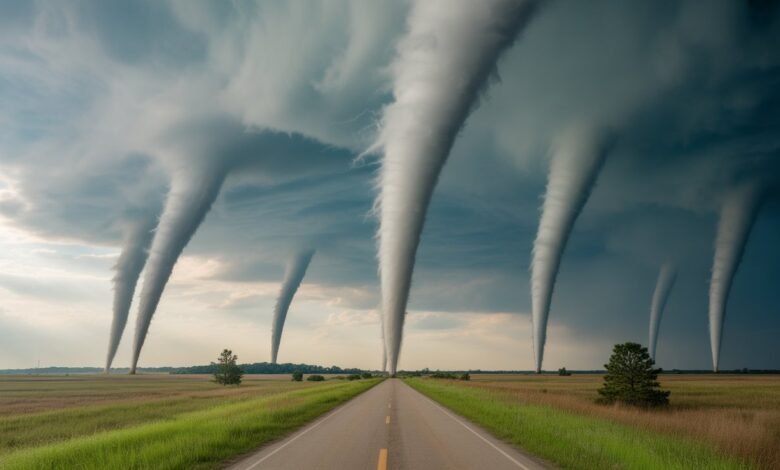
If you live in Mississippi or plan to visit, you already know the sky can change fast. One moment it is sunny. The next, the air turns green, the wind drops, and sirens start screaming. Mississippi tornadoes are not just a news story. They are a real, ongoing threat that kills people every single year.
In this guide, you will learn everything you need to know: why Mississippi is so vulnerable, the history of its worst storms, how to read the warning signs, where to shelter, and what steps you should take right now to keep your family safe.
This is not a topic you want to learn about after the storm hits. Read it today. Share it with someone you love.
186DEATHS IN 2011 SUPER OUTBREAK (MS)
~50TORNADOES PER YEAR IN MISSISSIPPI
EF5HIGHEST CATEGORY EVER RECORDED IN MS
#1DEADLIEST US TORNADO STATE PER CAPITA
Why Mississippi Gets Hit So Hard
You might wonder why Mississippi suffers so many violent storms. The answer comes down to pure geography. Mississippi sits at the crossroads of two powerful air masses. Warm, wet air flows north from the Gulf of Mexico. Cold, dry air pushes south from the Rocky Mountains. When these two forces collide over Mississippi, the atmosphere becomes explosively unstable.
This clash creates the perfect conditions for supercell thunderstorms. These are not ordinary storms. Supercells rotate. They produce the kind of persistent updrafts that spin tornadoes for miles. Mississippi sits right in a corridor where these supercells love to form, intensify, and stay on the ground far longer than they do in other states.
The state also has a lot of flat, open terrain in the Delta region and forested hills in the north and east. Both landscapes allow tornadoes to build speed and strength with minimal friction. There are fewer natural barriers to slow them down.
🌍
Geography matters: Mississippi’s position between the Gulf Coast and the central plains creates a near-perfect storm factory. Warm, moist Gulf air is the fuel. Cold continental air is the trigger. The result is some of the most explosive severe weather in the entire country.
Tornado Alley vs. Dixie Alley
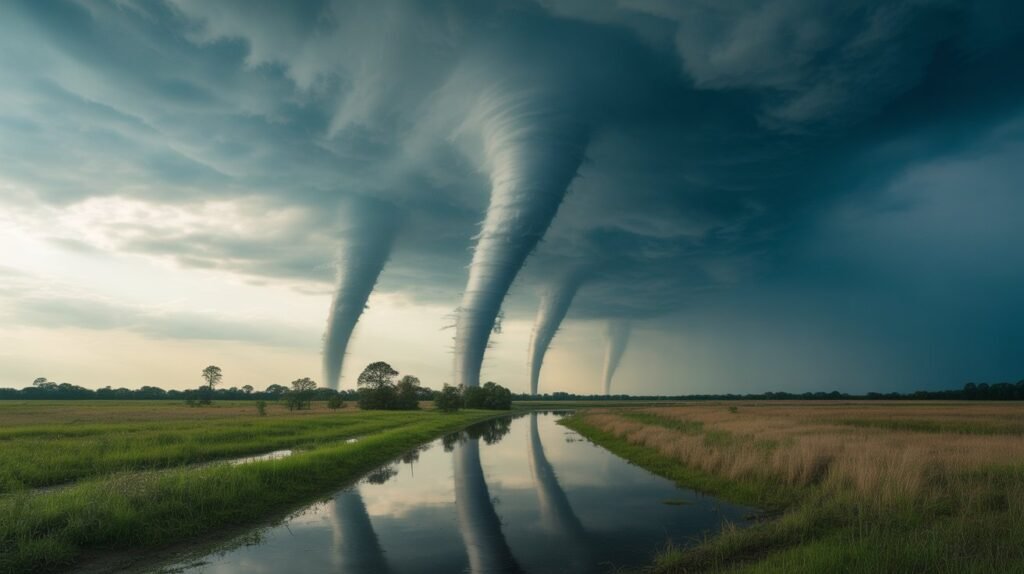
Most people picture Oklahoma and Kansas when they think about tornado country. That region is called Tornado Alley. But meteorologists now talk about a second zone: Dixie Alley. This corridor covers Mississippi, Alabama, Tennessee, Arkansas, and parts of the surrounding states.
Dixie Alley tornadoes are often more deadly than those in the traditional Tornado Alley. Here is why. Storms often hit at night when people are asleep and cannot receive or act on warnings. Mobile homes are more common in this region, and they offer almost zero protection. Dense forest cover makes it hard to see a tornado coming. Many rural communities lack adequate shelter infrastructure.
Mississippi tornadoes in Dixie Alley also tend to travel farther. Some stay on the ground for dozens of miles. The longer a tornado tracks, the more destruction it delivers.
The Worst Mississippi Tornadoes in History
Understanding the history of major storms puts the real danger in perspective. These are not abstract events. They are tragedies that reshaped communities and took hundreds of lives.
MARCH 18, 1925
The Tri-State Tornado
The deadliest single tornado in US history began in Missouri, tore through Illinois, and struck portions of the mid-south region. It killed 695 people across its entire path. It remains the benchmark for catastrophic tornado damage in American history.
APRIL 5, 1936
Tupelo Tornado
This EF5-level storm killed 216 people in Tupelo alone. It was one of the deadliest single-city tornado strikes ever recorded in the United States. Entire neighborhoods were wiped off the map. The disaster pushed the federal government to fund early warning research.
APRIL 6, 1936
Gainesville Tornado Outbreak
The day after Tupelo, another devastating outbreak struck across the Deep South. Mississippi communities were still in shock from the previous day when new storms formed.
APRIL 27, 2011
Super Outbreak
This single day produced 218 confirmed tornadoes across the Southeast. Mississippi suffered catastrophic losses. Several EF4 and EF5 tornadoes ripped through the state. More than 186 Mississippians lost their lives that day. It remains the deadliest tornado day in the state’s modern history.
MARCH 24, 2023
Rolling Fork Tornado
An EF4 tornado with winds exceeding 170 mph struck the small town of Rolling Fork in the Mississippi Delta. It killed 21 people and completely destroyed much of the town. The storm tracked on the ground for over 60 miles, tearing through multiple communities in a matter of minutes.
When Do Mississippi Tornadoes Strike?
One of the most important things you can know is when your risk is highest. Mississippi does not follow the same seasonal pattern as Tornado Alley states. The danger here spreads across a much longer period each year.
Two Peak Seasons
Mississippi actually sees two distinct tornado seasons. The first runs from March through May. This is the spring season, driven by strong cold fronts clashing with Gulf moisture. The second peaks in November and December. This fall season catches many people off guard because most Americans associate tornadoes with spring.
- Spring peak (March to May): The most powerful storms of the year tend to form in this window. Cold fronts are strong. Moisture levels are high. Supercells form frequently.
- Fall peak (November to December): Cooler temperatures do not eliminate tornado risk in Mississippi. Fall storms often move faster and hit at night, reducing warning time.
- Nighttime tornadoes: Mississippi has a higher rate of nocturnal tornadoes than most states. You can be asleep when a deadly storm arrives. This is why a weather radio with an alarm is not optional. It is essential.
- Any month is possible: Mississippi has recorded deadly tornadoes in every single month of the year. Do not assume January makes you safe.
⚠
Nighttime warning: Studies show that nocturnal tornadoes are significantly more deadly than daytime storms. Your phone alarm may not wake you in time. A dedicated NOAA weather radio with battery backup is the single most important safety investment you can make as a Mississippi resident.
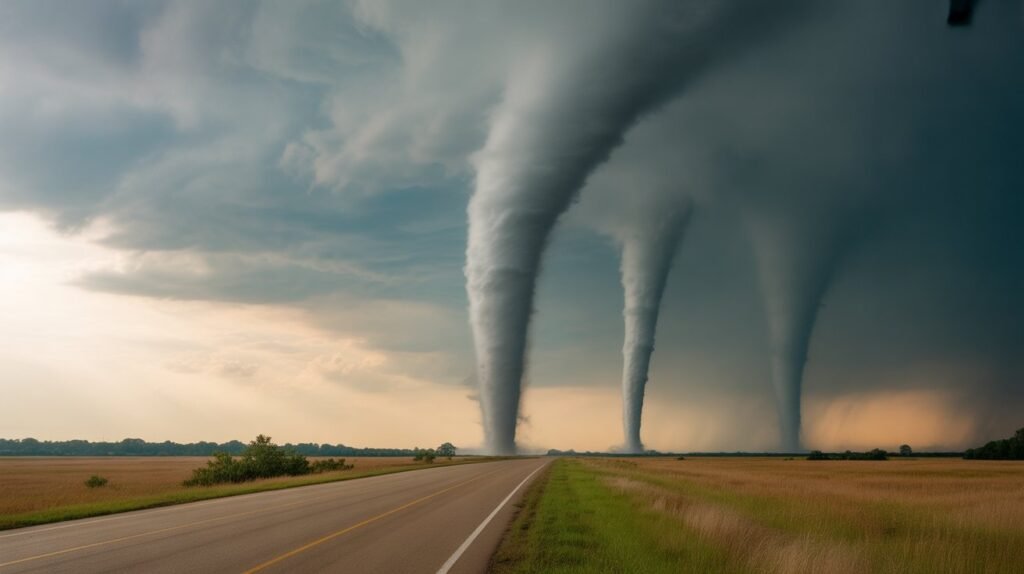
How to Recognize a Tornado Warning
Knowing the difference between a tornado watch and a tornado warning can save your life. These two terms mean very different things, and confusing them is a dangerous mistake many people make.
Tornado Watch vs. Tornado Warning
- Tornado Watch: Conditions are favorable for tornado development. No tornado has been confirmed yet. You should stay alert, monitor weather updates, and know your shelter plan. Think of a watch as a yellow light: be ready to move fast.
- Tornado Warning: A tornado has been spotted by trained observers or confirmed by radar. Take shelter immediately. Do not wait to see or hear it. A warning is a red light: move now.
- Tornado Emergency: This is the highest level alert issued by the National Weather Service. It means a particularly dangerous and confirmed tornado is threatening a populated area. Treat this as a life-threatening emergency with zero hesitation.
Nature’s Warning Signs
Sirens and weather apps are your best tools. But knowing what to look for in the sky also helps. Here are the signs that a tornado may be forming or nearby:
- A dark, greenish sky that looks unlike any storm color you have seen before
- Large hail with little to no wind, followed by sudden eerie calm
- A loud, continuous roar similar to a freight train or jet engine
- A rotating, funnel-shaped cloud descending from the base of a storm
- Debris or dust swirling near the ground even before a funnel is visible
“Do not wait to see a tornado before taking action. By the time it is visible, you may have only seconds to reach shelter.”
— National Weather Service, Jackson, Mississippi
Where to Shelter During a Mississippi Tornado
Your survival in a tornado depends almost entirely on where you shelter. Choosing the right spot makes the difference between walking away and not coming home at all. Here is what you need to know.
Best Shelter Options (Ranked)
- Underground storm shelter or safe room: This is the gold standard. FEMA-approved safe rooms are built to withstand EF5 winds. If you live in Mississippi, this is the best investment you can make in your family’s safety.
- Interior room on lowest floor: Go to the center of your home, away from windows. A bathroom, closet, or hallway in the middle of the house gives you extra walls between you and the storm.
- Bathtub with mattress: If you have no better option, lie in the tub and pull a mattress over yourself. The tub is anchored to the floor and can provide limited protection from debris.
- School, office, or community building: Look for buildings with reinforced interior rooms. Many Mississippi schools and community centers now have designated tornado shelter areas.
Where NOT to Shelter
- ✗Mobile homes or trailers (evacuate before the storm arrives)
- ✗Under highway overpasses (these create wind tunnels and offer zero real protection)
- ✗In a vehicle (only if you have no other option and only to find a solid building)
- ✗Large open rooms like gyms, auditoriums, or shopping centers with wide, flat roofs
- ✗Near windows, exterior walls, or glass doors
- ✗Outdoors in the open, trying to “outrun” or observe the storm
What to Do If You Are in a Car or Outdoors
Being caught outside or in your car during a Mississippi tornado is terrifying. But you have options. The wrong choice can kill you. The right choice can save you.
If you are driving and a tornado warning is active, your first goal is to find a sturdy building. Drive at a right angle away from the storm’s path if you can safely do so. Do not try to outrun a tornado on a highway. They move fast and change direction unpredictably.
If there is absolutely no shelter available, abandon your car. Find the lowest ground possible, like a ditch or a depression in the earth. Lie flat, cover your head with your arms, and protect yourself from flying debris. Do not shelter under bridges or overpasses. Studies after major tornado outbreaks confirmed that people who hid under overpasses suffered higher injury and death rates than those who lay flat in open ground.
Building a Tornado Emergency Kit for Mississippi Families
Preparation before the storm is what separates families who recover quickly from those who struggle for months. You should have an emergency kit ready and accessible at all times. Not packed when the sirens go off. Ready now.
- ✓NOAA weather radio with battery backup and alarm function
- ✓Three days of water (one gallon per person per day)
- ✓Non-perishable food for at least 72 hours
- ✓First aid kit with prescription medications
- ✓Flashlights and extra batteries
- ✓Copies of important documents in a waterproof bag
- ✓Sturdy shoes and a change of clothes for each family member
- ✓Cash in small bills (ATMs may be down after a storm)
- ✓Phone charger and portable power bank
- ✓Whistle to signal for help if trapped under debris
How Mississippi Communities Are Responding
After decades of deadly storms, Mississippi has made real progress in warning systems and community preparedness. The state has invested in a dense network of Doppler radar stations that can detect rotation inside a storm earlier than ever before. Average tornado warning lead times have improved from under 5 minutes in the 1980s to roughly 13 minutes today.
Communities like Tupelo, which was rebuilt after the catastrophic 1936 storm, now have robust emergency management systems. Many counties have developed free or low-cost safe room programs that help low-income residents access proper shelter.
After the devastating Rolling Fork tornado in 2023, state and local officials fast-tracked community shelter grants for the Mississippi Delta, one of the most underserved areas in the state for storm infrastructure. Progress is real, but the work is far from finished.
💡
Local tip: Call your county emergency management office today to ask about free or subsidized safe room installation programs. Many Mississippi counties offer these benefits to qualifying homeowners, and most people do not know they exist.
Mississippi Tornado Safety for Mobile Home Residents
I want to address this directly because it affects hundreds of thousands of Mississippi families. Mobile homes are not safe in a tornado. Not even a small one. Even a weaker EF1 or EF2 tornado can destroy a mobile home completely. This is not a question of building quality or age. It is a matter of physics.
If you live in a mobile home park, you need to know the location of the nearest permanent shelter before tornado season begins. Many mobile home communities have designated shelter buildings on the property. Know where it is. Know how long it takes to walk there. Practice getting there at night.
If your community does not have a designated shelter, contact your county emergency management office. They can help identify options and may have resources to support community shelter construction. This is a life-or-death gap in preparedness that you should not accept passively.
What You Need to Remember
Mississippi tornadoes are among the most dangerous natural threats in the United States. The state’s geography, climate, and dual storm seasons create a uniquely deadly risk that lasts nearly year-round. But knowledge and preparation genuinely save lives.
- Know the difference between a watch and a warning
- Identify your best shelter option before a storm arrives
- Invest in a weather radio with a battery backup alarm
- Build an emergency kit and keep it updated
- Never shelter in a mobile home or under an overpass
- Share this information with your neighbors, your family, and your community
The next major Mississippi tornado is not a question of if. It is a question of when. The families who survive are the ones who prepared before the sirens ever turned on. Are you ready?
Frequently Asked Questions
QWhen is tornado season in Mississippi?
Mississippi has two peak tornado seasons. The primary season runs from March through May. A secondary season occurs from November through December. However, Mississippi tornadoes can strike in any month, so year-round alertness is important.
QWhat was the deadliest tornado in Mississippi history?
The 1936 Tupelo tornado killed 216 people in a single city, making it one of the deadliest single-location tornado events ever recorded in the US. The 2011 Super Outbreak later killed more than 186 Mississippians in a single day across multiple storms.
QIs Mississippi part of Tornado Alley?
Mississippi is not part of the traditional Tornado Alley, which covers the Great Plains. Instead, it is in a region called Dixie Alley, which includes the southeastern states. Dixie Alley tornadoes are often more deadly because storms strike at night and more residents live in mobile homes.
QWhere is the safest place to shelter during a tornado in Mississippi?
The safest option is an underground storm shelter or a FEMA-approved safe room. If you do not have one, go to an interior room on the lowest floor of a sturdy building, away from all windows. A bathroom, closet, or central hallway offers the most protection.
QAre mobile homes safe during Mississippi tornadoes?
No. Mobile homes are not safe in any tornado, regardless of strength. Even weaker tornadoes can destroy them entirely. All mobile home residents should know the location of a nearby permanent shelter and go there when a warning is issued.
QHow much warning time do Mississippians typically get before a tornado?
Average warning lead times have improved to around 13 minutes today, up from under 5 minutes in earlier decades. However, some fast-moving storms can produce tornadoes with little or no advance warning. This is why having a weather radio alarm is so critical, especially at night.
QCan you outrun a tornado in a car in Mississippi?
Attempting to outrun a tornado in a car is dangerous and generally not recommended. Tornadoes can change direction suddenly and travel faster than 70 mph. Your best option is to find a solid building immediately. Only if no building is available should you abandon your car and lie flat in the lowest ground nearby.
QWhat does a tornado sky look like in Mississippi?
Before a tornado, the sky often turns a dark greenish or yellowish color. The air may feel still and eerily calm after strong winds. Large hail frequently precedes a tornado. You may hear a roar similar to a freight train as the storm approaches. Any of these signs should prompt you to seek shelter immediately.
QWhat should a Mississippi family keep in a tornado emergency kit?
Your kit should include water, non-perishable food, a NOAA weather radio, a first aid kit with medications, flashlights, extra batteries, a portable phone charger, copies of important documents, and a whistle. Keep the kit in your designated shelter area so it is accessible when seconds count.
QWhat is the difference between a tornado watch and a tornado warning in Mississippi?
A tornado watch means conditions are favorable for tornado formation and you should stay alert. A tornado warning means a tornado has been confirmed on the ground or detected by radar and you must take shelter immediately. A tornado emergency is the highest alert and signals an exceptionally dangerous, confirmed storm threatening populated areas.
also read: reflectionverse.com
email: johanharwen@314gmail.com
author name: James
About the author: James is a weather safety writer and emergency preparedness educator with over 12 years of experience covering severe weather across the American South. He has reported on multiple major tornado outbreaks in Mississippi and Alabama, including the 2011 Super Outbreak and the 2023 Rolling Fork disaster. James holds a certification in Emergency Management and partners with county emergency offices to develop public safety content. His work focuses on translating complex meteorological data into practical, life-saving guidance for everyday familie