Introduction
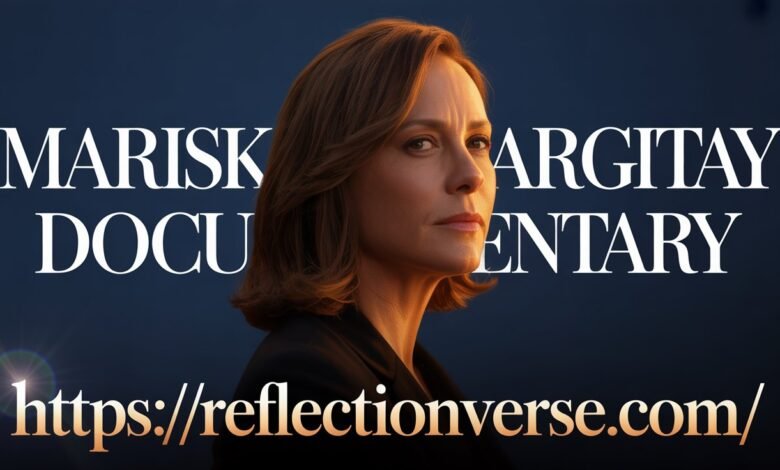
Some stories take decades to tell. The Mariska Hargitay documentary “My Mom Jayne” is proof of that.
You probably know Mariska Hargitay as the powerhouse behind Detective Olivia Benson on Law & Order: SVU. But in 2025, she stepped away from the screen — and behind the camera — to tell the most personal story of her life. She went searching for a mother she barely remembers. A mother who died when Mariska was just three years old.
The result is one of the most emotionally raw and critically acclaimed documentaries of the year. It premiered at the Cannes Film Festival to a standing ovation. It earned a 100% score on Rotten Tomatoes. And it revealed a secret Mariska had kept hidden for over 30 years.
In this article, you will get everything you need to know about the Mariska Hargitay documentary — what it covers, why it matters, what critics and audiences say, where you can watch it, and why this film goes far beyond a celebrity biography.
What Is the Mariska Hargitay Documentary?
The documentary is called “My Mom Jayne.” It is a 2025 HBO film directed and produced by Mariska Hargitay herself.
This is her feature film directorial debut. She had previously worked as a producer on other documentaries, including I Am Evidence and Emanuel. But “My Mom Jayne” is different. This one is personal.
The film explores the life and complicated legacy of Jayne Mansfield — one of Hollywood’s biggest stars of the 1950s and 1960s. Mansfield was famous for her blonde bombshell image, her sharp wit, and her enormous personality. She was also Mariska’s mother.
Jayne Mansfield died in a tragic car accident in 1967. She was 34 years old. Mariska was only three. Two of her brothers, Mickey Jr. and Zoltan, were also in the vehicle at the time of the crash.
Mariska grew up with almost no memories of her mother. The documentary becomes her attempt to finally find out who Jayne Mansfield really was — not as a Hollywood icon, but as a human being and as a mom.

Why Did Mariska Hargitay Make This Documentary?
The question everyone asks is: why now?
Mariska has spent decades playing a character defined by strength, justice, and empathy. In many ways, the search for her mother shaped who she became. But she had always avoided diving into Jayne Mansfield’s story publicly.
She openly admits she spent years feeling embarrassed by her mother’s sex symbol image. The “dumb blonde” persona, the breathless voice, the publicity stunts — none of it matched the mother she wished she could remember. And without personal memories to hold onto, the tabloid version of Jayne became the only version available.
But curiosity eventually won. Mariska started piecing together the truth. She interviewed her siblings. She opened storage lockers full of untouched memorabilia. She found home movies no one had seen in decades. And she started asking questions that she had never let herself ask before.
That process became the film.
As she explained at the Cannes premiere, she wanted to celebrate the power of film to help her remember someone she never had the fortune to grow up with. This documentary is that celebration.
The Cannes Premiere: A Standing Ovation
The Mariska Hargitay documentary made its world premiere on May 17, 2025, in the Cannes Classics section of the 78th Cannes Film Festival.
The reception was extraordinary.
The film received a four-minute standing ovation. Mariska, emotional and visibly moved, addressed the crowd with her family and producing team seated in the audience. Cannes Film Festival chief Thierry Fremaux called the film “extraordinary” before she took the stage.
For Mariska, the Cannes setting carried extra meaning. Her mother had attended Cannes years earlier, and photos of a young Jayne Mansfield at the festival looking free and happy had always stayed with Mariska. Returning to Cannes — not as an actress, but as a filmmaker telling her mother’s story — felt like completing a circle.
The documentary was also nominated for the prestigious L’Oeil d’or (Golden Eye) award at Cannes, which honors the best documentary at the festival.
What Does the Documentary Cover?
“My Mom Jayne” is not a typical Hollywood biography. It does not just line up facts and archive clips. Instead, it follows Mariska on a deeply personal investigation.
Here is what the film covers:
The life of Jayne Mansfield The documentary traces Jayne’s rise from Vera Jayne Palmer — a classically trained violinist and pianist who spoke five or six languages — to one of the most photographed actresses of the 1950s. Mansfield was intelligent, ambitious, and complex. She moved herself and her first daughter, Jayne Marie, to Hollywood after an early divorce. She chased stardom deliberately and succeeded on her own terms.
The tension between image and reality Mansfield herself once said publicly that she used her pin-up image as a means to an end. The documentary explores what that choice cost her — how the “dumb blonde” persona she constructed overshadowed her real talent and intelligence. Mariska grapples with this contradiction throughout the film.
The siblings’ perspectives Mariska interviews all of her siblings separately. Jayne Marie, Mickey Jr., Zoltan, and Tony Cimber each carry their own memories and grief. The scenes where they sit together in their feelings — still moved to tears nearly 60 years later — are among the most powerful in the film.
The storage locker discovery One of the most visually stunning moments comes when the family opens a storage locker that had not been touched in decades. Inside, they find memorabilia, home movies, awards, and photographs. They even discover Jayne Mansfield’s 1956 Golden Globe — an award that now sits side by side with Mariska’s own Golden Globe in her home.
The fatal accident The film addresses the 1967 crash honestly and carefully. The documentary also notes that Jayne’s death prompted significant conversations about road safety. The National Highway Traffic Safety Administration eventually proposed safety standards related to underride guards on large trucks — though those regulations were not finalized until 1998, over three decades later.

The Big Reveal: Mariska’s Biological Father
This is the part of the documentary that caught the world’s attention.
For the first time publicly, Mariska revealed that her biological father is not Mickey Hargitay — the Hungarian bodybuilder and actor who raised her and whom she loved deeply. Her biological father is Nelson Sardelli, an Italian singer who had a love affair with Jayne Mansfield.
Mariska learned this when she was around 25 years old, after seeing a photograph of Sardelli. She met him for the first time five years later. She kept this knowledge private for decades.
In the documentary, she interviews Sardelli and his two daughters. The exchange is handled with honesty, warmth, and remarkable grace.
Importantly, Mariska makes clear that Mickey Hargitay will always be her father. He raised her alongside stepmother Ellen Hargitay after Jayne’s death. The film serves, in part, as a love letter to him. But telling the full truth about her origins felt necessary — both for her own healing and for the integrity of the story she was telling.
The reveal shifted the entire emotional arc of the documentary. It transforms “My Mom Jayne” from a biography into something far more universal — a story about identity, belonging, secrets, and what it means to belong to a family.
Critical Reception: What Are People Saying?
The Mariska Hargitay documentary has received exceptional reviews from both critics and audiences.
On Rotten Tomatoes, the film holds a 100% score based on 37 critics’ reviews. On IMDb, it carries an impressive 8.3 out of 10 rating.
Critics have described the film as touching, authentic, and unexpectedly grounded. Reviewers note that Mariska approaches the story with genuine curiosity rather than sentimentality. She does not tip into melodrama. She sits with the confusion, the grief, and the gaps in her memory honestly.
One reviewer noted that the family interviews — raw, tearful, and unpolished — feel impossible to replicate. Only someone with Mariska’s access and trust could have drawn those exchanges out.
Audiences have responded equally strongly. Viewers describe watching with tears streaming. They describe feeling a personal connection to the void of growing up without a parent. They thank Mariska for opening her life in a way she did not have to.
The documentary does not pretend to have all the answers. It is content with showing the process of searching — and that honesty is exactly what makes it resonate.
Where to Watch the Mariska Hargitay Documentary
You have several options to stream “My Mom Jayne” right now.
The documentary is available on:
- HBO Max (subscription required, plans start at $10.99/month)
- Hulu (via the Disney+, Hulu, and HBO Max bundle)
- Apple TV (available to rent or purchase)
- Fandango at Home (available to rent or buy)
The film received a limited theatrical release on June 20, 2025, which made it eligible for Oscar consideration. It then premiered on HBO and Max on June 27, 2025, making it widely accessible to home audiences.
The runtime is approximately 1 hour and 45 minutes. It is rated R for language and some sexual content.
Mariska Hargitay as a Filmmaker: A New Chapter
Many people know Mariska as an actress who has played Olivia Benson for over 26 seasons and more than 550 episodes of Law & Order: SVU — a record-breaking run.
But “My Mom Jayne” reveals a different side of her creative voice. As a director, she approaches her subjects with the same empathy and attentiveness she brings to her acting. She does not force emotion. She creates the conditions for it to emerge naturally.
She had experience as a documentary producer before this film. “I Am Evidence,” which she produced, explored the rape kit backlog in the United States. That film reflected her broader advocacy work for sexual assault survivors through her organization, the Joyful Heart Foundation.
“My Mom Jayne” is different in scope but consistent in spirit. It is still about uncovering truth. It is still about giving someone — in this case, her own mother — the full story they deserve.
What Makes This Documentary Stand Out
There are many celebrity documentaries. Most of them feel like extended press releases. “My Mom Jayne” does not feel like that at all.
Here is what makes it different:
It is genuinely vulnerable. Mariska shows up in everyday clothes, without much makeup, sitting with her confusion openly. She does not perform healing. She goes looking for it.
The archival material is extraordinary. Because Jayne Mansfield was one of the most photographed actresses of her era, the film has access to a remarkable collection of photos, footage, and home movies — much of it never seen publicly before.
The family access is unmatched. Nobody outside the Hargitay family could have gotten these interviews. The conversations between siblings carry weight and intimacy that no outside filmmaker could have reached.
It corrects a cultural wrong. The film pushes back on the shallow, one-dimensional version of Jayne Mansfield that popular culture has always presented. It shows her as a loving mother, a multilingual intellectual, a trained classical musician, and a woman navigating enormous pressures in a male-dominated industry. The public image and the private person were vastly different.
It earns its emotional ending. The film builds toward a resolution that reviewers describe as genuinely moving. It does not manufacture catharsis. It arrives at it honestly.
Conclusion
The Mariska Hargitay documentary “My Mom Jayne” is not just a film about a famous actress. It is a film about what happens when grief and curiosity finally win out over avoidance. It is about the courage to ask the questions you have always been afraid to ask — and then sit with whatever answers come back.
Mariska spent most of her life knowing Jayne Mansfield only through photographs, tabloids, and other people’s stories. With this documentary, she finally met her mother on her own terms. And in doing so, she gave audiences something genuinely rare: a celebrity documentary that actually feels human.
If you have not watched it yet, you have no excuse. It is on HBO Max right now. Set aside two hours. Have tissues nearby.
And if you have already seen it — what moment hit you the hardest? Share this article with someone who needs to know about this film.
Frequently Asked Questions
What is the Mariska Hargitay documentary called?
The documentary is called “My Mom Jayne.” It was released in 2025 and is available on HBO Max, Hulu (via bundle), and Apple TV.
What is the documentary about?
“My Mom Jayne” follows Mariska Hargitay as she explores the life and legacy of her mother, Hollywood icon Jayne Mansfield, who died in a car accident in 1967 when Mariska was only three years old.
Is the Mariska Hargitay documentary on Netflix?
No. “My Mom Jayne” is an HBO original documentary and is not available on Netflix. You can stream it on HBO Max or Hulu (through the bundle).
What secret did Mariska Hargitay reveal in the documentary?
Mariska revealed for the first time publicly that her biological father is Nelson Sardelli, an Italian singer, not Mickey Hargitay, who raised her after her mother’s death.
Did the Mariska Hargitay documentary premiere at Cannes?
Yes. “My Mom Jayne” had its world premiere in the Cannes Classics section of the 78th Cannes Film Festival on May 17, 2025. It received a four-minute standing ovation.
What is the Rotten Tomatoes score for “My Mom Jayne”?
The documentary holds a 100% score on Rotten Tomatoes based on 37 critics’ reviews, and an 8.3 out of 10 on IMDb.
How long is the documentary?
The runtime is approximately 1 hour and 45 minutes.
Is “My Mom Jayne” Mariska Hargitay’s directorial debut?
Yes. This is her feature film directorial debut, though she had previously worked as a documentary producer on projects including “I Am Evidence.”
Who is interviewed in the documentary?
The documentary features interviews with Mariska’s siblings (Jayne Marie, Mickey Hargitay Jr., Zoltan Hargitay, and Tony Cimber), her stepmother Ellen Hargitay, Jayne Mansfield’s former press secretary Rusty Strait, and biological father Nelson Sardelli and his daughters.
Is “My Mom Jayne” eligible for an Oscar?
Yes. The documentary received a limited theatrical release on June 20, 2025, which qualified it for consideration for an Academy Award nomination.
also read: reflectionverse.com
email: johanharwen314@gmail.com
author name Jordan Ellis
About the Author
Jordan Ellis is a film critic and entertainment journalist with over eight years of experience covering Hollywood, streaming culture, and documentary cinema. Jordan specializes in long-form features on films that sit at the intersection of personal history and public legacy. When not writing about movies, Jordan hosts a weekly podcast on documentary filmmaking and contributes to several major entertainment publications. You can follow Jordan’s work at the intersection of culture, memory, and storytelling.