

Introduction
You probably remember exactly where you were when you heard the news. June 25, 2009—the day the music world stood still. Michael Jackson death sent shockwaves across the globe, leaving millions of fans heartbroken and confused.
The King of Pop was gone at just 50 years old.
But what really happened that day? How did one of the most iconic performers in history die so suddenly? And why do questions still linger more than 15 years later?
In this article, we’ll walk through the events leading up to Michael Jackson death, the investigation that followed, and the lasting impact on music and pop culture. You’ll get the full story—the facts, the controversies, and the legacy that continues today.
Let’s dive in.
The Final Days: What Was Michael Jackson Doing Before His Death?
Michael Jackson was preparing for something big. His “This Is It” concert series was scheduled to begin in London in July 2009. These weren’t just any shows—they were supposed to be his comeback.
After years away from the spotlight, Jackson was ready to prove he still had it.
He was rehearsing intensively. Friends and colleagues said he seemed excited. He wanted to show the world that the King of Pop could still deliver the magic.
But behind the scenes, things weren’t quite right.
Jackson had been struggling with sleep issues for years. He was under enormous pressure to deliver 50 sold-out shows. The physical demands were taking a toll on his aging body.
Some people close to him noticed he looked thin. His energy levels seemed inconsistent.
Still, no one expected what was coming.
June 25, 2009: The Day Michael Jackson Died
It started as a regular Thursday morning in Los Angeles. Michael Jackson was at his rented mansion in Holmby Hills. He had been up late the night before, rehearsing for his upcoming tour.
Dr. Conrad Murray, Jackson’s personal physician, was with him that morning.
Around 12:00 PM, Murray discovered Jackson wasn’t breathing. He called 911. Paramedics arrived within minutes. They tried to revive him.
It wasn’t working.
Jackson was rushed to UCLA Medical Center. Doctors continued their efforts. But at 2:26 PM, Michael Jackson was pronounced dead.
The news broke fast. TMZ reported it first. Within minutes, social media exploded. Twitter actually crashed from the volume of posts about Michael Jackson death.
The world was in shock.
Fans gathered outside the hospital. People cried in the streets. Radio stations around the globe began playing his music non-stop.
The King of Pop was really gone.
What Caused Michael Jackson’s Death?
The official cause of death was acute propofol intoxication. In simpler terms, Jackson died from an overdose of propofol, a powerful anesthetic typically used in hospitals during surgery.
But propofol wasn’t the only drug in his system.
The autopsy revealed several other medications:
- Lorazepam (an anti-anxiety medication)
- Midazolam (a sedative)
- Diazepam (another sedative, commonly known as Valium)
- Lidocaine (a local anesthetic)
- Ephedrine (a stimulant)
This cocktail of drugs was dangerous. And propofol should never be used outside a medical setting with proper monitoring equipment.
So why was Jackson taking propofol at home?
He called it his “milk.” Jackson had been using propofol to help him sleep. He suffered from severe insomnia, and according to reports, he had become dependent on the drug to get any rest.
Dr. Conrad Murray was the one administering it.
The Los Angeles County Coroner ruled Michael Jackson death a homicide. This meant someone else’s actions directly led to his death—even if those actions weren’t intended to kill him.
That someone was Dr. Murray.
The Trial of Dr. Conrad Murray
Dr. Conrad Murray was charged with involuntary manslaughter. The trial began in September 2011, more than two years after Michael Jackson death.
The prosecution argued that Murray acted with gross negligence. He gave Jackson propofol without proper equipment. He left Jackson alone while the drug was in his system. He delayed calling 911 when he found Jackson unresponsive.
These weren’t just mistakes. They were fatal errors.
The defense tried to argue that Jackson may have given himself extra doses of propofol while Murray was out of the room. They painted Jackson as an addict who couldn’t be controlled.
But the evidence was overwhelming.
Medical experts testified that Murray’s treatment fell far below the standard of care. No responsible doctor would administer propofol in a home setting without proper monitoring.
On November 7, 2011, the jury found Dr. Conrad Murray guilty.
He was sentenced to four years in prison but served only two years due to overcrowding. Many fans felt this wasn’t enough justice for Michael Jackson death.
The trial revealed disturbing details about Jackson’s final hours. It showed how one man’s poor judgment ended the life of a global icon.
Michael Jackson’s Health: The Hidden Struggles
Michael Jackson death wasn’t just about one bad night. It was the culmination of years of health problems, both physical and mental.
Let’s talk about what Jackson was dealing with:
Chronic Pain Jackson suffered from severe back and leg pain. Some of it stemmed from injuries during performances. He had also dealt with burns to his scalp from a Pepsi commercial accident in 1984.
Pain medication became part of his daily routine.
Vitiligo Jackson had vitiligo, a skin condition that causes loss of pigmentation. This is why his skin tone changed so dramatically over the years. He wasn’t “bleaching” his skin—he was dealing with a medical condition.
The condition affected his self-image. It likely contributed to his anxiety and stress.
Insomnia This was perhaps his biggest struggle. Jackson claimed he couldn’t sleep naturally. He would go days with just a few hours of rest.
This is why he turned to propofol. He was desperate for sleep.
Stress and Anxiety The pressure of being Michael Jackson was immense. He faced constant media scrutiny. He dealt with allegations and legal battles. The stress took a massive toll on his mental health.
Prescription Drug Use Jackson had a complicated relationship with prescription medications. After the 1984 burn incident, he was given pain medication. This likely started a pattern of dependence that continued for decades.
Friends and family tried to intervene. But Jackson’s fame made it difficult for people to say no to him.
Understanding these health issues helps paint a fuller picture of Michael Jackson death. It wasn’t just negligence by one doctor. It was a tragic combination of pain, addiction, and desperation.
The Aftermath: How the World Reacted
The response to Michael Jackson death was unprecedented. It wasn’t just news—it was a global event.
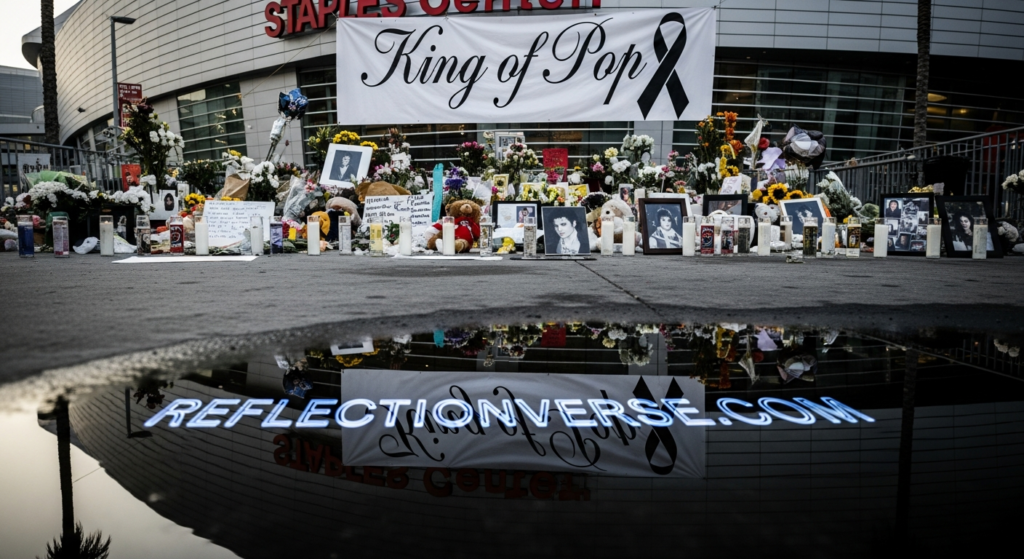
Memorial Service Jackson’s public memorial took place at the Staples Center in Los Angeles on July 7, 2009. Over 17,000 people attended. An estimated 2.5 billion people worldwide watched it on television or online.
It was one of the most-watched events in television history.
Stars like Usher, Mariah Carey, and Stevie Wonder performed. His daughter Paris spoke, breaking hearts when she said, “Daddy has been the best father you could ever imagine.”
Music Sales Skyrocketed In the week following Michael Jackson death, he sold more than 2.6 million albums in the United States alone. His music topped charts around the world.
People wanted to remember him through his art.
“This Is It” Documentary The footage from Jackson’s final rehearsals was turned into a documentary film called “This Is It.” It was released in October 2009.
The film showed Jackson still had his talent. He moved gracefully. He hit his notes. He seemed ready for the comeback everyone hoped for.
It made his death even more tragic. We saw what could have been.
Estate and Legacy Michael Jackson’s estate has earned billions since his death. His music continues to sell. His influence remains strong in pop culture.
But his family has also faced legal battles over his estate and the circumstances of his death.

Conspiracy Theories: Did Michael Jackson Fake His Death?
I need to address this because you’ve probably heard these theories online.
Some people believe Michael Jackson faked his own death. They point to supposed “evidence” like:
- Claiming the body in photos doesn’t look like him
- Alleging he wanted to escape the pressure of fame
- Citing supposed “sightings” after June 25, 2009
Let me be clear: Michael Jackson did not fake his death.
There was an autopsy. There was a trial. Dr. Murray went to prison. Jackson’s family mourned publicly. His children lost their father.
These conspiracy theories disrespect his memory and hurt his loved ones.
Yes, Jackson’s death raised questions. Yes, the circumstances were unusual. But the evidence is overwhelming and conclusive.
The King of Pop died on June 25, 2009. That’s the truth.
Lessons from Michael Jackson’s Death
What can we learn from this tragedy? I think there are several important takeaways:
1. The Dangers of Prescription Drug Abuse Prescription medications can be just as dangerous as illegal drugs. Just because a doctor prescribes something doesn’t mean it’s safe in all circumstances.
Michael Jackson death highlighted how easily prescription drugs can lead to dependency and tragedy.
2. The Importance of Proper Medical Care Dr. Murray’s negligence killed Michael Jackson. He ignored basic medical protocols. He put convenience above safety.
You should never hesitate to question medical advice that seems wrong. Get second opinions. Ensure your doctors follow proper procedures.
3. The Price of Fame Jackson’s fame made it hard for him to get proper help. People were afraid to say no to him. His wealth allowed him to find doctors willing to do dangerous things.
Fame shouldn’t mean you can bypass medical safety. Jackson needed help, not enablers.
4. Addressing Mental Health and Insomnia Jackson’s insomnia was serious. Instead of getting proper sleep therapy or psychiatric help, he turned to propofol as a shortcut.
If you struggle with sleep, seek proper treatment. There are safe, effective options available.
5. The Importance of Speaking Up People around Jackson knew something was wrong. But fear, loyalty, or financial dependence kept them silent.
If you see someone in danger—especially from medical negligence or substance abuse—speak up. Your voice could save a life.
Michael Jackson’s Legacy: More Than His Death
While we’ve focused on how he died, we shouldn’t forget how he lived.
Michael Jackson changed music forever. He wasn’t just a singer or dancer—he was a complete artist.
Musical Innovations From “Thriller” to “Billie Jean” to “Beat It,” Jackson created songs that defined generations. His music videos were mini-movies. He didn’t just follow trends—he created them.
Breaking Barriers Jackson was one of the first Black artists to receive heavy rotation on MTV. He broke down racial barriers in the music industry.
Humanitarian Work Jackson donated millions to charity. He supported causes from children’s hospitals to HIV/AIDS research. He used his platform to promote healing and unity.
Influence on Today’s Artists Listen to Beyoncé, Justin Timberlake, Bruno Mars, or The Weeknd. You’ll hear Jackson’s influence. They all cite him as an inspiration.
Michael Jackson death was tragic. But his life was extraordinary.
His music lives on. His dance moves are still imitated. His impact continues to shape pop culture.
That’s a legacy worth celebrating.
Conclusion
Michael Jackson death on June 25, 2009, shocked the world and left an unfillable void in music. The combination of propofol, negligent medical care, and years of health struggles ended the life of the King of Pop far too soon.
We’ve covered what happened that day, the trial of Dr. Conrad Murray, Jackson’s hidden health battles, and the worldwide reaction to his passing.
But beyond the tragedy, remember this: Michael Jackson gave us joy. He gave us music that transcends generations. He showed us that art could break barriers and unite people.
His death taught us important lessons about prescription drug safety, proper medical care, and the dangers of unchecked fame.
Fifteen years later, we still feel the loss. But we also still feel the magic of his music.
What’s your favorite Michael Jackson memory? How did his music impact your life? Share your thoughts in the comments below.
FAQs
What was the exact cause of Michael Jackson death? Michael Jackson died from acute propofol intoxication combined with benzodiazepines. The Los Angeles County Coroner ruled it a homicide, meaning Dr. Conrad Murray’s actions directly caused his death through gross negligence.
Who was responsible for Michael Jackson death? Dr. Conrad Murray, Jackson’s personal physician, was found guilty of involuntary manslaughter. He administered propofol to Jackson in a home setting without proper monitoring equipment and failed to properly respond when Jackson stopped breathing.
What is propofol and why was Michael Jackson taking it? Propofol is a powerful anesthetic typically used in hospitals during surgery. Jackson was using it as a sleep aid because he suffered from severe insomnia. He called it his “milk.” Using propofol outside a medical facility without proper monitoring is extremely dangerous and was the direct cause of his death.
How old was Michael Jackson when he died? Michael Jackson was 50 years old when he died on June 25, 2009. His 51st birthday would have been just two months later, on August 29, 2009.
What happened to Dr. Conrad Murray after Michael Jackson death? Dr. Conrad Murray was convicted of involuntary manslaughter in 2011 and sentenced to four years in prison. He served only two years due to prison overcrowding. His medical license was revoked in California, Texas, and Nevada.
Did Michael Jackson have a funeral? Yes, Michael Jackson had a private funeral on September 3, 2009, at Forest Lawn Memorial Park in Glendale, California. He also had a public memorial service at the Staples Center in Los Angeles on July 7, 2009, which was watched by an estimated 2.5 billion people worldwide.
What were Michael Jackson’s last words? According to Dr. Murray’s testimony during the trial, Jackson’s last words were about his performances. He said, “I’m hurting right here” while pointing to his body, referring to physical pain. He also allegedly said he just wanted to be able to sleep.
What happened to Michael Jackson’s children after his death? Jackson’s three children—Prince, Paris, and Blanket (now known as Bigi)—were initially placed in the custody of their grandmother, Katherine Jackson. They’ve since grown up mostly out of the spotlight, though Paris has pursued a career in entertainment.
How much money has Michael Jackson’s estate made since his death? Michael Jackson’s estate has earned over $2 billion since his death in 2009. His music catalog, ongoing royalties, and various business ventures continue to generate substantial revenue, making him one of the highest-earning deceased celebrities.
Are there any conspiracy theories about Michael Jackson death? Yes, some people believe Jackson faked his death to escape fame or pressure. However, there is no credible evidence supporting these theories. The autopsy, trial, and overwhelming documentation confirm that Michael Jackson died on June 25, 2009.
Also read reflectionverse.com
