Introduction
Nobody expected it to end like this. The Indiana Fever came into this game riding momentum, with Caitlin Clark drawing national attention and a home crowd ready to erupt at Gainbridge Fieldhouse. And for most of the night, it looked like Indiana would get the result they wanted.
Then the Washington Mystics flipped the script.
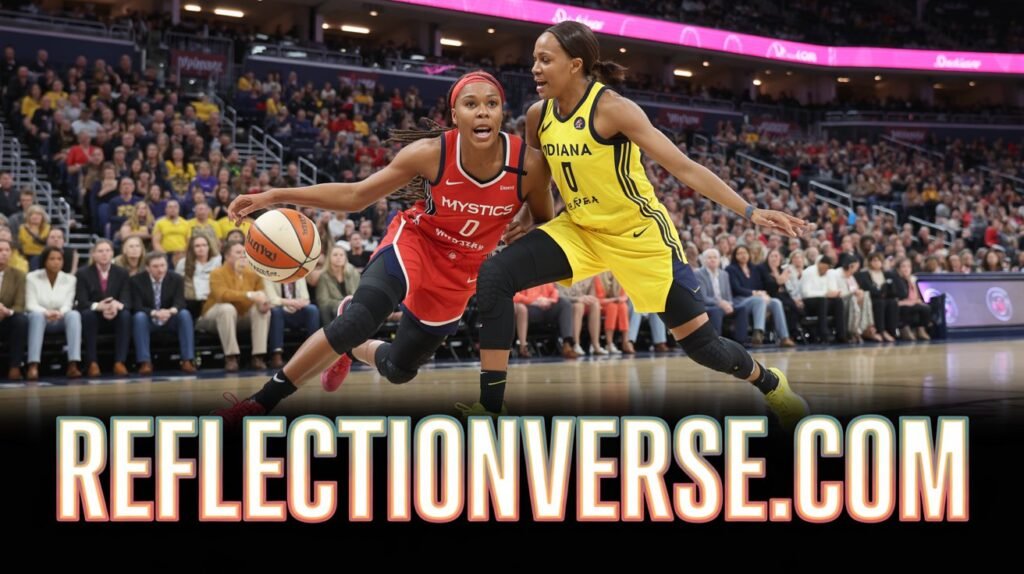
In one of the most dramatic finishes of the early 2026 WNBA season, the Mystics vs Fever game on May 15 ended with Washington pulling off a gutsy 104 to 102 road victory. Sonia Citron lit up the scoresheet with 30 points. Kiki Iriafen added a double-double. And despite Caitlin Clark pouring in 32 points for Indiana, the Fever could not hold on when it mattered most.
In this article, you get the full breakdown. We cover the final score, how each quarter played out, the standout individual performances, the key statistics that decided the game, and what this result means for both teams in the 2026 WNBA standings.
Final Score: Washington Mystics 104, Indiana Fever 102
Let that number sink in. A two-point road win in a hostile environment, against a team with Caitlin Clark on the floor. Washington pulled it off with superior shooting efficiency, relentless paint presence, and just enough defensive stops when the game was on the line.
Indiana held a lead at multiple points in this game. They even mounted a massive fourth quarter push, outscoring Washington 31 to 22 in the final period. But Washington’s cushion from the first three quarters proved just enough to survive the Fever’s comeback charge.
This result drops Indiana to 1 win and 2 losses on the young 2026 WNBA season. Washington improves to 2 wins and 1 loss, sitting third in the Eastern Conference standings.
Quarter by Quarter: How the Game Unfolded
First Quarter: Washington Sets the Tone Early
The Mystics came out focused and physical from the opening tip. Washington outscored Indiana 15 to 13 in the first quarter. It was not a blowout start, but it established a theme that would define the entire game: Washington attacked the paint, got to the free throw line, and converted at a high rate.
Indiana’s offense was not cold, but they could not match Washington’s efficiency in the early going. Clark showed early flashes, but the Fever as a team were chasing Washington’s rhythm from the first minutes.
Second Quarter: Washington Pulls Away
This is where the Mystics really took control. Washington outscored Indiana 20 to just 9 in the second quarter. That is an 11-point swing in a single period. By halftime, Washington led 35 to 22, a comfortable 13-point advantage heading into the break.
Indiana’s second quarter shooting collapsed. The Fever committed turnovers, struggled against Washington’s interior defense, and could not find consistent open looks. Washington meanwhile was attacking relentlessly in the paint, and Sonia Citron was already well into her dominant performance.
Third Quarter: Indiana Fights Back Slightly
Indiana shook off the rust in the third period and played much better. The Fever outscored Washington 21 to 26 in the third, meaning Washington still won the quarter but Indiana showed more fight. Clark began to heat up from the perimeter. The crowd sensed a comeback was possible.
Washington headed into the fourth quarter with their lead trimmed but still holding a meaningful advantage.
Fourth Quarter: Indiana’s Wild Charge Falls Just Short
The fourth quarter was an absolute spectacle. Indiana went on a 31-22 run in the final period, their best offensive output of the night. Clark was electric. Kelsey Mitchell added buckets. The Fever clawed, scratched, and got within striking distance.
But Washington made just enough plays. A key free throw here. A clutch bucket there. Indiana’s 11-point swing in the fourth nearly erased a 13-point halftime deficit, but Washington’s shooting efficiency and their huge in-game lead ultimately held.
The final buzzer sounded with the Mystics celebrating a 104 to 102 road victory, one of the most dramatic finishes of the early WNBA season.
Sonia Citron: The Performance of the Night
If you watched this game and had to pick one player who decided it, the answer is clear. Sonia Citron was absolutely magnificent for Washington.
Here are her final numbers:
- 30 points on 10 of 14 shooting (71.4% from the field)
- 9 of 10 from two-point range (90.0%)
- 9 of 10 from the free throw line (90.0%)
- 6 rebounds, 4 assists, 1 steal, 1 block
- A true shooting percentage of 81.5%, one of the most efficient individual performances you will see this season
- An efficiency rating of 41 for the game
That shooting percentage tells the full story. Citron was nearly unstoppable in the mid-range and around the basket. She drew fouls with ease, going to the line 10 times and converting 9. When a player shoots 71% from the field and 90% from the line in a road game against a loud crowd, the team usually wins. Washington did exactly that.
Citron’s paint presence was particularly damaging. She made 8 of 9 attempts at the rim and scored 16 of her 30 points in the paint. Indiana simply had no answer for her aggression and finishing ability.
Kiki Iriafen: The Double-Double That Anchored Washington
While Citron grabbed the headlines, Kiki Iriafen was the engine that kept Washington’s interior dominance humming throughout all four quarters.
Iriafen finished with:
- 25 points on 11 of 17 shooting (64.7%)
- 13 rebounds, giving her a double-double
- 2 assists, 1 steal, 1 block
- A true shooting percentage of 66.6%
- The highest plus/minus on Washington’s roster at plus 10
Thirteen rebounds in a road game against a tough interior team is remarkable. Iriafen controlled the glass, generated second chance opportunities, and kept possessions alive for Washington at critical moments. Her 7 second chance points helped extend leads that Indiana was working hard to erase.
One caveat worth noting: Iriafen did turn the ball over 6 times, which gave Indiana some extra possessions. The Fever scored 5 points off her turnovers. In a two-point game, those turnovers mattered. But her overall contribution was still the difference-making kind.
Shakira Austin: The Quiet Force in the Middle
Shakira Austin did not put up flashy numbers, but her impact was real. Austin contributed 19 points on 7 of 11 shooting (63.6%), grabbed 9 rebounds, and dished out 5 assists. She also blocked 3 shots and picked up a technical foul late in the game.
Austin operated with excellent efficiency in the paint, making 7 of 11 at the rim. Her 69.6% true shooting percentage tells you she was working smart angles and converting when it counted. Combined with Iriafen’s performance, Washington built a two-player interior attack that Indiana could not contain.
Caitlin Clark: 32 Points, But Not Enough
Caitlin Clark gave Indiana everything she had. She finished the game with 32 points on 10 of 28 shooting, connecting on 7 of 17 from three-point range. She added 8 assists, 4 rebounds, 2 steals, and 1 block. Her free throw shooting was perfect at 5 of 5.
Clark’s three-point shooting kept the Fever alive throughout the game. Seven made threes represent a huge offensive contribution. Her 8 assists show she was creating for teammates all night, not just hunting her own shot.
However, her 35.7% overall field goal percentage reflects the difficulty of what Washington threw at her. The Mystics contested her pull-up jumpers effectively and made her work for every bucket. Clark’s 4 turnovers also helped Washington generate points in transition.
The 32-point performance would win most individual battles. But when the opposing guard goes for 30 on 71% shooting, it is hard to come out on top even with a spectacular night.
Kelsey Mitchell: A Bright Spot in a Losing Effort
Kelsey Mitchell was Indiana’s second-leading scorer with 24 points. She made 10 of 25 shots (40%), knocked down 4 of 8 threes, and was particularly dangerous in fast break situations, converting 5 of 7 fast break attempts for 12 fast break points.
Mitchell brought relentless energy and kept Indiana’s offense functioning when things got tight. Her plus-minus of minus 10 reflects how the game went overall for Indiana, but she fought hard from start to finish.
Team Stats: The Numbers That Decided This Game
When you look at the team statistics, you quickly understand how Washington won despite Indiana’s furious fourth quarter push.
Washington Mystics:
- Field goal percentage: 55.9% (38 of 68)
- Two-point percentage: 61.5%
- Free throw percentage: 78.6% (22 of 28)
- Points in the paint: 58
- Total rebounds: 54
- True shooting percentage: 64.7%
- Biggest lead of the game: 14 points
Indiana Fever:
- Field goal percentage: 39.1% (36 of 92)
- Three-point percentage: 40.5% (17 of 42)
- Free throw percentage: 68.4% (13 of 19)
- Points in the paint: 28
- Total rebounds: 44
- Points off turnovers: 27 (generated from Washington’s 21 turnovers)
- Biggest lead of the game: 13 points
The single most revealing statistic is the points in the paint split. Washington scored 58 points in the paint. Indiana scored just 28. That is a 30-point interior differential in a two-point game. Washington attacked downhill, finished at the rim at an elite rate, and drew fouls while doing it.
Indiana’s strategy of firing 42 three-pointers, making 17 of them, is impressive. But Washington’s paint dominance proved more reliable and more consistent throughout four quarters.
Washington also attempted only 68 field goals to Indiana’s 92. Washington needed far fewer shots to generate more points. Their offensive efficiency was simply on another level in this game.

The Turnovers Problem: Washington’s Biggest Flaw
Washington’s performance was not flawless. The Mystics committed 21 total turnovers in this game, and Indiana converted those mistakes into 27 points. In a two-point game, that number looms large.
If Indiana had converted even slightly more efficiently off those turnovers, the final score would have looked very different. Washington got away with a sloppy possession game because their shooting efficiency was so dominant everywhere else.
Moving forward, Washington needs to clean up the ball-handling. Twenty-one turnovers is too many to survive consistently. Against a team with more shooting depth, those mistakes could prove fatal.
What This Win Means for the Washington Mystics
Washington is now 2 and 1 on the 2026 WNBA season, sitting third in the Eastern Conference behind the Atlanta Dream and the New York Liberty. Both Atlanta and New York are currently at better records, but the Mystics have shown they can beat anyone when Citron and Iriafen play at this level.
This win matters for several reasons:
- It came on the road. Winning at Gainbridge Fieldhouse against Indiana, with Clark on the floor, is no small feat.
- It showed depth. Georgia Amoore contributed 7 points and 4 assists off the bench. Cotie McMahon added 13 points. Washington is not a one or two-player team.
- It established identity. Washington is a paint-dominant, inside-out team. That identity showed up fully tonight.
The Mystics next travel to Dallas to face the Wings on May 19, then head to Seattle for a two-game series against the Storm. They have a chance to build real momentum if Citron and Iriafen maintain this form.
What This Loss Means for the Indiana Fever
Indiana falls to 1 and 2, fifth in the Eastern Conference. At 1 and 2, the Fever are behind schedule. A home loss to Washington, despite Clark’s 32-point effort, raises some real questions about Indiana’s supporting cast and interior defense.
The Fever allowed 58 points in the paint. That is a defensive breakdown, plain and simple. Washington’s Citron and Iriafen combined for 55 of those paint points. Indiana’s front line had no answer.
Clark is doing her part. But the Fever need more from Aliyah Boston, who scored just 9 points on 8 shots, and more consistency in rotations and defensive assignments. The talent is there. The execution against elite paint attackers needs improvement.
Indiana’s next game comes on June 8 when they host Washington again at Gainbridge Fieldhouse. That rematch is circled on every Fever fan’s calendar.
WNBA Eastern Conference Standings After This Game
Here is how the Eastern Conference looks after the Mystics vs Fever result:
| Rank | Team | Wins | Losses | Win Pct |
|---|---|---|---|---|
| 1 | Atlanta Dream | 2 | 0 | 1.000 |
| 2 | New York Liberty | 3 | 1 | .750 |
| 3 | Washington Mystics | 2 | 1 | .667 |
| 4 | Chicago Sky | 2 | 1 | .667 |
| 5 | Indiana Fever | 1 | 2 | .333 |
| 6 | Toronto Tempo | 1 | 2 | .333 |
| 7 | Connecticut Sun | 0 | 4 | .000 |
Washington is clearly one of the early movers in the East. Atlanta remains perfect but has played fewer games. New York sits atop the standings with three wins. Washington and Chicago both sit at 2 and 1, locked in a tight race for Eastern Conference positioning.
Indiana needs wins fast before the gap widens in the division.
Looking Ahead: The Rematch Is Coming
Mark June 8 on your calendar. Washington travels back to Indiana for a rematch at Gainbridge Fieldhouse. By then, both teams will have faced more competition and learned more about themselves.
Will Indiana’s paint defense improve enough to contain Washington’s interior scorers? Will Citron sustain this level of play? Will Clark and her supporting cast find a way to win a close one?
Those questions make the rematch one of the most anticipated regular season matchups in the 2026 WNBA calendar.
Conclusion
The Mystics vs Fever game on May 15, 2026 delivered everything WNBA basketball should: elite individual performances, a furious comeback attempt, and a two-point finish that came down to the final moments.
Washington won because of superior efficiency, paint dominance, and Sonia Citron’s 30-point masterclass. Indiana fought to the end, with Caitlin Clark putting up 32 points, but the Fever’s interior defense and field goal efficiency were simply not good enough to overcome Washington’s shooting and rebounding.
The Mystics are 2 and 1 and building momentum. Indiana is 1 and 2 and searching for answers. The rematch on June 8 cannot come fast enough.
Who do you think wins the next time these two teams meet? Drop your prediction in the comments, share this recap with a WNBA fan who missed the game, and keep following for more live coverage as the 2026 season heats up.
Frequently Asked Questions About Mystics vs Fever
1. What was the final score of the Mystics vs Fever game on May 15, 2026? The Washington Mystics defeated the Indiana Fever 104 to 102 in a road game at Gainbridge Fieldhouse.
2. Who was the top scorer in the Mystics vs Fever game? Caitlin Clark led all scorers with 32 points for Indiana. Sonia Citron led Washington with 30 points and was the more efficient performer, shooting 71.4% from the field.
3. How did Caitlin Clark perform against the Mystics? Clark scored 32 points on 10 of 28 shooting, hitting 7 of 17 threes and going 5 of 5 from the line. She added 8 assists, 4 rebounds, 2 steals, and 1 block but had 4 turnovers.
4. What were Sonia Citron’s stats against Indiana? Citron scored 30 points on 10 of 14 shooting (71.4%), with 9 of 10 from the free throw line, 6 rebounds, 4 assists, and a true shooting percentage of 81.5%.
5. Why did Indiana lose despite Caitlin Clark scoring 32 points? Washington dominated the paint, scoring 58 points in the paint to Indiana’s 28. The Mystics also shot 55.9% from the field compared to Indiana’s 39.1%, making Washington significantly more efficient overall.
6. What are the current WNBA standings after this game? In the Eastern Conference, Atlanta Dream lead at 2-0, followed by New York Liberty at 3-1, Washington Mystics at 2-1, Chicago Sky at 2-1, and Indiana Fever at 1-2.
7. When do the Mystics and Fever play again? The rematch is scheduled for June 8, 2026, with the Mystics visiting the Fever at Gainbridge Fieldhouse in Indianapolis.
8. How many turnovers did Washington commit in this game? Washington committed 21 total turnovers. Indiana converted those mistakes into 27 points. Despite that, Washington’s shooting efficiency was good enough to win by 2 points.
9. Who led Washington in rebounding? Kiki Iriafen led all rebounders with 13 boards, contributing to her double-double of 25 points and 13 rebounds on 64.7% shooting.
10. Was this game close throughout? Washington led by as many as 14 points, but Indiana mounted a massive fourth quarter comeback, outscoring Washington 31 to 22 in the final period. The Fever fell just 2 points short in the end.
also read: reflectionverse.com
email: johanharwen@314gmail.com
Author Name: Danielle R. Torres
About the Author : Danielle R. Torres is a WNBA writer and women’s basketball analyst with over eight years of experience covering the sport at every level. She has followed the Washington Mystics and Indiana Fever closely since their most competitive eras and specializes in live game breakdowns, player development stories, and women’s basketball culture. When she is not courtside or breaking down box scores, you will find her hosting a weekly women’s basketball podcast and mentoring young sports journalists.