Introduction
If you follow National League baseball, you already know that Mets vs Nationals games rarely feel like a formality. This is a divisional rivalry between two teams with very different goals, very different rosters, and very different ideas about what success looks like in 2026. The matchup pulls you in every single time.
The New York Mets are chasing their first NL East title since 2015. The Washington Nationals are deep in a rebuild, leaning on a young, exciting core that refuses to just roll over. When these two teams meet, the stakes shift depending on the calendar, but the baseball is almost always worth watching.
In this article, you will get the full picture. We cover the head-to-head history, what each team brings to the field in 2026, the key players to watch, and what these games mean for the NL East race. Whether you are a Mets fan, a Nationals fan, or just a baseball lover who wants smart analysis, you are in the right place.
The Head-to-Head History Between the Mets and Nationals
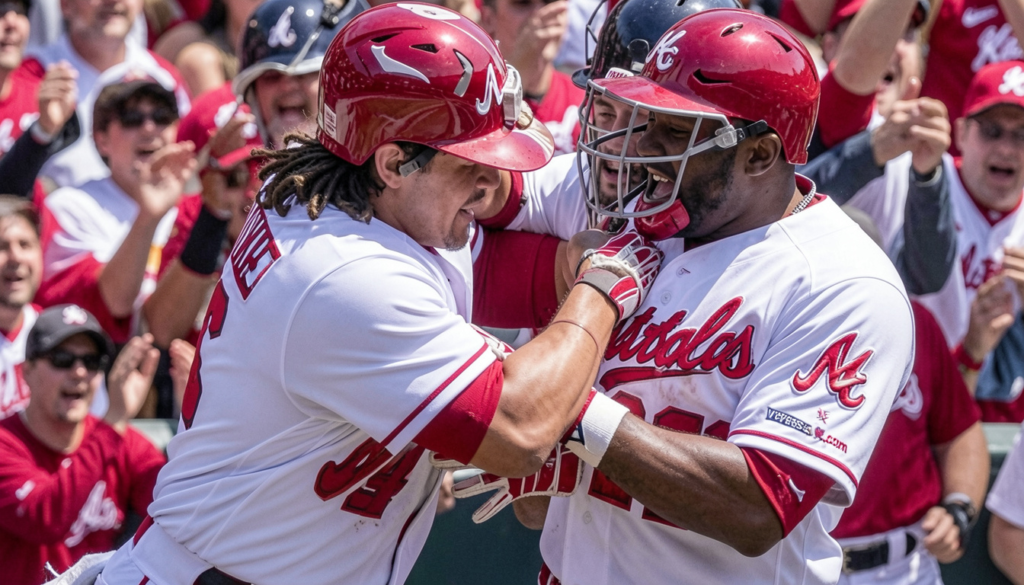
The rivalry goes back to 2005 when the Montreal Expos relocated and became the Washington Nationals. Since then, these two franchises have played over 297 games against each other.
Here is the big-picture number that tells you everything: since 2006, the Mets and Nationals each own exactly 148 wins in their head-to-head matchups. That is as close as it gets across two decades of divisional baseball.
Recent Seasons at a Glance
The recent history shows how dramatically the balance of power can swing:
- 2024: The Mets went 11-2 against Washington, one of their most dominant performances against any opponent that year.
- 2025: The Mets went 7-6, a much tighter split that reflected the Nationals’ growing competitiveness.
- 2026 (last 10 games): The Mets hold a 4-6 record, meaning Washington has actually been the better team in their most recent meetings.
That 2026 number is important. It tells you the Nationals are not a pushover anymore. Their young core is maturing, and they are starting to beat teams they used to lose to consistently.
The 2026 Mets: A Brand New Team Chasing an Old Dream
The New York Mets entered 2026 as one of the most talked-about teams in the National League. The front office, led by David Stearns, completely reshaped the roster after the painful 2025 collapse.
What Went Wrong in 2025
The 2025 Mets were a cautionary tale. They rocketed out to 45 wins and a 5.5-game lead on the division. Then things fell apart. New York finished 13 games behind Philadelphia and missed the Wild Card entirely, losing out to Cincinnati in the final stretch. Pitching was identified as the main culprit late in the season.
The Big 2026 Offseason Moves
The Mets responded aggressively. Here are the key additions:
- Freddy Peralta (SP): One of the most reliable starters in baseball, acquired to anchor the rotation.
- Bo Bichette (3B): A proven offensive producer, now playing an unfamiliar position.
- Jorge Polanco (1B): Another veteran bat asked to move around the diamond.
- Devin Williams (RP): Brought in to shore up a bullpen that lost Edwin Diaz to free agency.
- Marcus Semien (2B): Experience and leadership in the infield.
The departures hurt emotionally. Pete Alonso, Brandon Nimmo, Jeff McNeil, Edwin Diaz, and Cedric Mullins all moved on. The Mets genuinely look different from any team they have put on the field in recent memory.
The Core That Remained
Around all the new faces, the Mets still have Francisco Lindor and Juan Soto as their two brightest stars. Both are among the best players in baseball. Lindor brings elite defense and consistent offense. Soto is one of the most dangerous hitters in the sport. When you build around those two, you have something real.
Clay Holmes also returns after a breakout first season as a starter. He made 31 starts in 2025 and posted a 114 ERA+ with 129 strikeouts. That is legitimate top-of-rotation production.
Rookie Nolan McLean made a strong impression in his eight-start debut last season and projects as a key part of the 2026 rotation for the full year.
The 2026 Nationals: Young, Hungry, and Surprisingly Dangerous
Washington is not trying to win the World Series in 2026. Let’s be direct about that. The Nationals are in the middle of a rebuild, guided by one of the youngest front office groups in baseball. Their manager, GM, and president are all in their 30s, which tells you something about the direction they are heading.
But rebuilding does not mean helpless. The Nationals have legitimate talent, and in divisional games especially, they show up.
James Wood: The Player Everyone Should Know
If you have not been watching James Wood, now is the time. The young outfielder just came off his first All-Star season, where he slugged 31 home runs. He is the centerpiece of this rebuild and a true five-tool player who can beat you in multiple ways.
CJ Abrams: Quietly Building Something Special
CJ Abrams has posted nearly identical numbers in each of the last two seasons, including at least 18 home runs and 31 stolen bases in back-to-back years. That kind of consistency from a young shortstop is rare. He is not a household name outside Washington yet, but he should be.
The Rotation Reality
The Nationals’ pitching staff is their biggest weakness. MacKenzie Gore, a key piece of the Juan Soto trade return, was traded away this winter. The rotation now leans heavily on Cade Cavalli as the main building block, with veterans Sonny Gray (recovering from Tommy John surgery), Griffin and Mikolas eating innings. This is not a rotation that wins games by itself. The offense and the bullpen will need to carry the load when the Mets come to town.
Why Mets vs Nationals Games Matter More Than You Think
You might look at the standings and assume these are lopsided games. The Mets are chasing a division title. The Nationals are rebuilding. Easy wins for New York, right?
That is not how divisional baseball works.
Division Games Are Different
Every game between NL East opponents counts double. A win over Washington is not just a win. It is also one fewer win for a team that competes with you for the same standings space. When the Mets play the Nationals, they are not just playing for a W. They are playing to protect their position in the tightest division race in baseball.
The Nationals Have Already Made Their Point in 2026
Remember those 2026 numbers we mentioned earlier? In their last 10 head-to-head meetings entering mid-May 2026, the Nationals hold a 6-4 advantage. The Mets got blown out 14-2 on April 29th. That is not a noise-level fluctuation. That is Washington telling the rest of the division that they will not just hand games away.
NL East Tightness Amplifies Every Series
The NL East in 2026 is projected to be one of the most competitive in baseball. The Phillies, Mets, and Braves all have legitimate postseason aspirations. The Marlins are young and unpredictable. The Nationals are the spoiler. In that environment, going 7-6 against Washington when you needed to go 10-3 is the kind of thing that can cost you a playoff spot in September.
Key Matchup Angles to Watch
Starting Pitching Depth
When Freddy Peralta and Clay Holmes are healthy and rolling, the Mets have a real advantage over Washington’s rotation. The Nationals simply do not have arms at that level right now. But the Mets’ rotation has had injury concerns in 2026, and when they go short on starters, the Nationals’ lineup, led by Wood and Abrams, can do serious damage.
The Bullpen Battle
Both teams have invested in their relief corps. The Mets brought in Devin Williams after losing Diaz. Washington quietly rebuilt their bullpen last year and targeted specific reliever types with purpose. Late-game situations in this matchup are genuinely competitive.
Offense vs. Pitching
The Mets have one of the most dangerous lineups in the NL when healthy. Juan Soto and Francisco Lindor at the top of your order creates problems for every pitcher in baseball. The Nationals’ best chance to win any series against New York is to keep games low-scoring and force the Mets’ lineup into a pitching duel they are not always ready for.
What the Rest of 2026 Holds for This Matchup
The Mets sit at 20-26 heading into mid-May 2026. That is not where they expected to be. It creates urgency in every divisional series, including against Washington.
The good news for Mets fans is that the schedule still offers plenty of opportunities to right the ship against the Nationals. These two teams meet regularly throughout the season, and the Mets have historically performed well against Washington when the games matter most, like their 11-2 dominance in 2024.
The bad news is that Washington has already proven in 2026 that they will not simply cooperate. The Nationals are a legitimate threat to play spoiler in a tight division race, which means every remaining series between these two teams carries genuine postseason implications.
Venues: Citi Field vs Nationals Park
Part of the fun of this rivalry is the contrast in ballparks.
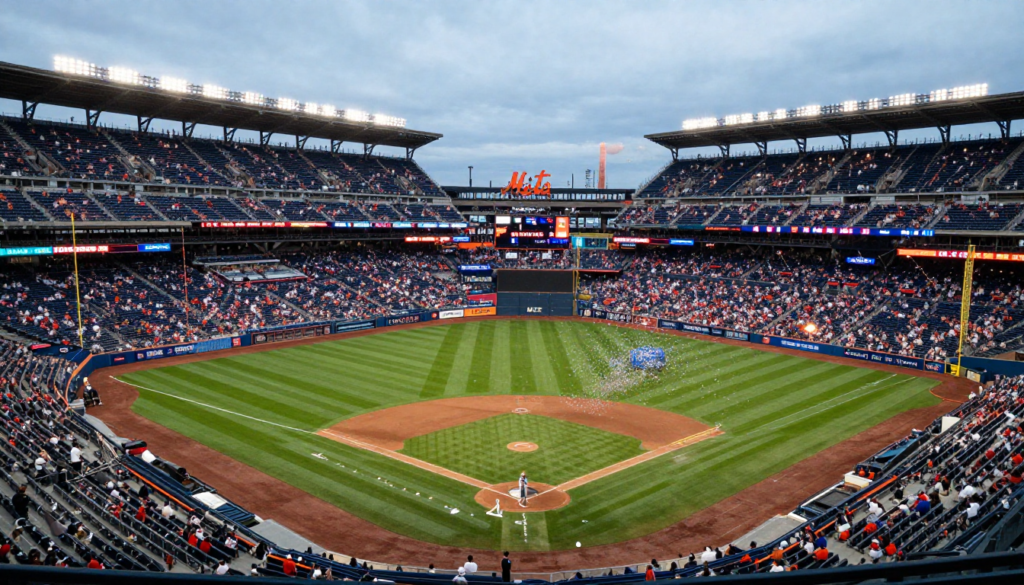
Citi Field in Flushing, Queens is a pitcher-friendly park with a deep center field. It favors the Mets when their pitching is sharp. The atmosphere during important divisional games is genuinely electric.
Nationals Park in Washington, D.C. has a more hitter-friendly feel. The dimensions allow for more offensive output, which plays into Washington’s hands when James Wood and CJ Abrams are locked in. The stadium regularly draws strong crowds for NL East games, with attendance touching 30,000 to 32,000 for big series games.
The Bigger Picture: NL East Implications
Here is what you need to understand about where both teams stand in the larger NL East story.
The Mets were widely projected to contend for the 2026 division title. Projections from ZiPS and PECOTA both had New York finishing around 89 wins and competing for first place. They have the roster to do it. Juan Soto, Francisco Lindor, Freddy Peralta, Clay Holmes — that is a legitimate contender on paper.
The Nationals were built for the future, not for now. Their front office trio in their 30s is making long-term decisions. Trading MacKenzie Gore, developing James Wood, giving CJ Abrams room to grow — these are the moves of an organization prioritizing 2028 and 2029 over 2026.
But baseball does not care about your timeline. The Nationals can and will beat the Mets when the opportunity presents itself. And in a competitive division, that matters enormously.
Final Thoughts
The Mets vs Nationals rivalry in 2026 is more interesting than most casual fans realize. You have a contender trying to rediscover its best form after a heartbreaking 2025. You have a rebuilding team with genuine young talent that refuses to be a walkover. And you have every game sitting in the context of one of baseball’s most competitive divisions.
If you watch only one game this weekend, make it a Mets-Nationals game. The standings make it matter. The talent on both sides makes it watchable. And the unpredictability of recent head-to-head results makes it genuinely exciting.
Which team do you think wins the season series? Let us know what you think — and share this article with a baseball fan who still underestimates what Washington is building.
Frequently Asked Questions
1. What is the all-time head-to-head record between the Mets and Nationals? Since 2006, both teams have each won exactly 148 games across 297 total matchups, making it one of the most evenly-matched divisional rivalries in the NL.
2. What was the Mets’ record against the Nationals in 2024? The Mets went 11-2 against Washington in 2024, one of their most dominant performances against any single opponent that season.
3. How did the Mets do against the Nationals in 2025? The Mets went 7-6 against Washington in 2025, a much closer split that showed the Nationals’ improvement as a team.
4. Are the Mets a playoff contender in 2026? Yes. Multiple projection models, including ZiPS and PECOTA, project the Mets around 89 wins and as one of the top contenders for the NL East title or a Wild Card spot.
5. Who are the key players for the Washington Nationals in 2026? James Wood is the franchise centerpiece after his first All-Star season with 31 home runs. CJ Abrams is right behind him, posting back-to-back seasons with at least 18 HR and 31 stolen bases.
6. Who are the best hitters on the 2026 Mets? Juan Soto and Francisco Lindor lead the lineup. Soto is one of the most dangerous hitters in baseball. Lindor combines elite defense with consistent offensive production.
7. Is Nationals Park a hitter-friendly ballpark? Generally yes. Nationals Park plays slightly hitter-friendly compared to Citi Field, which benefits Washington’s offense when James Wood and CJ Abrams are hitting well.
8. Why did the Mets struggle in 2025 despite their strong start? The Mets won 45 of their first roughly 75 games and held a 5.5-game division lead. Pitching failures down the stretch caused a collapse, and they finished 13 games behind Philadelphia, missing the postseason entirely.
9. What did the Mets do in the 2026 offseason? The Mets added Freddy Peralta, Bo Bichette, Jorge Polanco, Devin Williams, and Marcus Semien while losing Pete Alonso, Brandon Nimmo, Edwin Diaz, Jeff McNeil, and others. It was one of the most significant roster overhauls in the franchise’s recent history.
10. How important are Mets vs Nationals games for the NL East standings? Very important. Every divisional game counts double since teams compete directly for the same playoff spots. Given how tight the 2026 NL East race is projected to be, the Mets vs Nationals series could easily decide a Wild Card spot by October.
also read: reflectionverse.com
email: johanharwen@314gmail.com
Author Name: James Hartley
About the Author : James Hartley is a baseball writer and sports analyst with over eight years of experience covering MLB, with a focus on National League storylines, divisional races, and player development. He has contributed to several major sports publications and runs a weekly baseball column that breaks down what the numbers actually mean for real fans. When he is not writing about baseball, James can be found listening to podcasts and arguing that divisional play is the most underrated drama in sports.