
Echidna Greek Mythology Unveiled: The Terrifying Mother of Monsters 2026

Introduction
When you think about Greek mythology, gods like Zeus and heroes like Hercules probably come to mind first. But lurking in the shadows of these famous figures is a creature so terrifying that even the gods feared her offspring. Her name is Echidna, and she holds one of the most fascinating yet chilling roles in echidna greek mythology. Half-woman and half-serpent, this monstrous being became known as the “Mother of All Monsters.” Her children terrorized heroes and mortals alike across ancient Greek tales. If you’ve ever wondered where the Hydra, Cerberus, or the Chimera came from, the answer leads back to Echidna. In this article, you’ll discover everything about echidna greek mythology—from her origins and appearance to her legendary offspring and lasting influence on ancient stories.
Who Was Echidna in Greek Mythology?
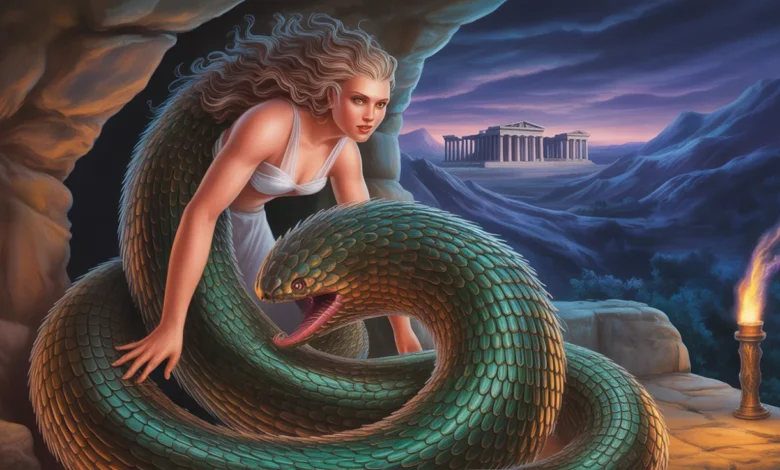
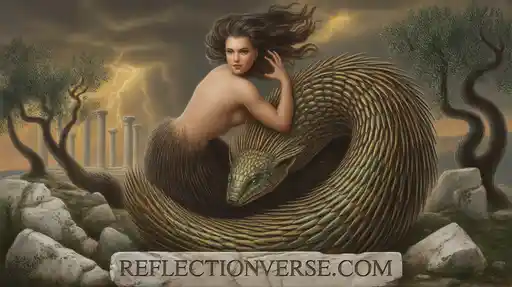
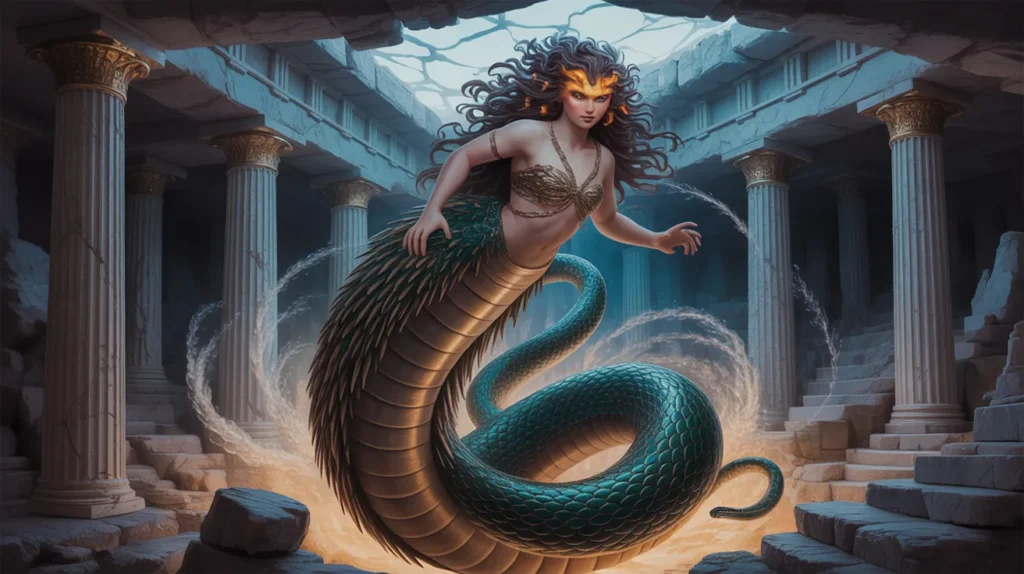
Echidna stands out as one of the most unique figures in Greek mythology. Unlike the beautiful goddesses or noble heroes, she embodied pure monstrosity. Ancient texts describe her as a creature of dual nature. From the waist up, she appeared as a beautiful woman with dark eyes and fair features. But from the waist down, her body transformed into a massive, scaly serpent. This combination made her both alluring and horrifying.
According to echidna greek mythology, she lived in a cave deep beneath the earth. Some sources place her dwelling in the land of the Arimi. Others suggest she lived in Scythia or near Mount Arima. She rarely left her underground home. Instead, she would lure unsuspecting travelers to their doom. She consumed raw flesh and lived in eternal darkness. The ancient Greeks saw her as a primordial force of chaos and destruction.
Her role wasn’t just about terror though. Echidna served a crucial function in the mythological ecosystem. She represented the wild, untamed aspects of nature that civilization couldn’t control. Through her monstrous children, she challenged heroes to prove their worth. Without Echidna and her offspring, many of the greatest heroic tales would never have existed.
The Origins and Parentage of Echidna
The exact origins of Echidna remain somewhat murky in echidna greek mythology. Different ancient sources provide varying accounts of her birth. The most commonly accepted version comes from Hesiod’s “Theogony,” one of the oldest sources on Greek mythology.
According to Hesiod, Echidna was the daughter of Phorcys and Ceto. Both parents were ancient sea deities associated with the dangers of the ocean. This made Echidna part of a lineage of primordial monsters. Her siblings included other terrifying beings like the Gorgons and the Graeae. Some traditions claim she was immortal and ageless, though this varies by source.
Another tradition suggests different parentage entirely. Some ancient writers believed Echidna was the daughter of Tartarus and Gaia. Tartarus represented the deep abyss of the underworld. Gaia was the primordial Earth goddess. This parentage would make her even more ancient and fundamental to the cosmic order. It would connect her directly to the earth’s darkest depths.
A third account names Chrysaor and Callirhoe as her parents. Chrysaor was the giant who sprang from Medusa’s blood. Callirhoe was an Oceanid nymph. This version links Echidna more closely to other monstrous bloodlines in Greek mythology.
Regardless of which origin story you follow, one thing remains clear. Echidna came from ancient, powerful forces that existed before the Olympian gods. She represented something primal and dangerous that couldn’t be fully tamed or controlled.
Echidna’s Mate: Typhon, the Father of Monsters
In echidna greek mythology, Echidna’s most significant relationship was with Typhon. If Echidna was the Mother of Monsters, Typhon was undoubtedly the Father. Together, they formed the most terrifying couple in all of Greek mythology.
Typhon himself was a fearsome creature. Ancient descriptions paint him as the largest and most powerful monster ever born. He had a hundred dragon heads sprouting from his shoulders. His eyes flashed fire. His voice could mimic any sound, from bull bellows to lion roars to human speech. He was so massive that his head brushed the stars. His arms could span from the eastern to western horizons.
Gaia created Typhon to challenge Zeus and the Olympian gods. In the famous Titanomachy battle, Typhon nearly succeeded in overthrowing Zeus. The king of the gods only barely defeated him by burying him under Mount Etna. The volcano’s eruptions were said to be Typhon’s angry breath escaping from beneath the earth.
When Echidna and Typhon united, they created a legacy of terror. Their cave became a breeding ground for the creatures that would populate nightmares throughout ancient Greece. Unlike many divine couples in Greek mythology, Echidna and Typhon stayed together. They shared their dark realm beneath the earth. Together, they raised their monstrous children to challenge the heroes and gods above.
The relationship between Echidna and Typhon shows an interesting dynamic in echidna greek mythology. While Zeus and other gods had numerous affairs, this monstrous couple remained devoted to each other. They represented a dark mirror to the divine family on Mount Olympus. Where the Olympians brought order, Echidna and Typhon’s family brought chaos.
The Legendary Offspring of Echidna
The most significant aspect of echidna greek mythology is undoubtedly her children. Echidna didn’t just birth ordinary monsters. She gave life to the most famous and terrifying creatures in all of Greek legend. These offspring became the adversaries that defined many heroic tales.
Cerberus, the Three-Headed Hound
Perhaps Echidna’s most famous child is Cerberus. This three-headed dog guarded the gates of the underworld. His job was to prevent the dead from leaving and the living from entering without permission. Each of his heads could see in different directions simultaneously. His tail was a living serpent. Some versions gave him a mane of snakes as well.
Cerberus appears in numerous myths, but most famously in the tale of Heracles. As his final labor, Heracles had to capture Cerberus and bring him to the surface. This task proved one of the hero’s most difficult challenges. The hound’s connection to echidna greek mythology shows how her offspring served as ultimate tests for heroes.
The Lernaean Hydra
Another of Echidna’s children was the Lernaean Hydra. This serpentine water monster had multiple heads (accounts vary from seven to nine or even more). The Hydra’s most terrifying feature was its regeneration. When you cut off one head, two more would grow in its place. Its blood and breath were also extremely poisonous.
The Hydra lived in the swamps of Lerna. Heracles faced it as his second labor. He could only defeat it with help from his nephew Iolaus. They cauterized each neck stump after cutting off the heads. This prevented regeneration. The Hydra’s defeat became one of Heracles’ most celebrated victories. This creature from echidna greek mythology tested not just strength but also intelligence.
The Chimera
The Chimera was one of Echidna’s strangest offspring. This creature combined parts of multiple animals. It had a lion’s head and body, a goat’s head rising from its back, and a serpent for a tail. Some descriptions give it dragon-like wings as well. It breathed fire from its lion mouth.
The hero Bellerophon eventually killed the Chimera. He rode the winged horse Pegasus and shot the creature from above. The Chimera’s hybrid nature made it a symbol of impossible or fantastical ideas. Even today, we use the word “chimera” to describe something composed of incongruous parts or an unrealistic dream.
Orthrus, the Two-Headed Dog
Orthrus was Cerberus’s lesser-known brother. This two-headed dog belonged to the giant Geryon. He guarded Geryon’s cattle on the island of Erytheia. Like his more famous brother, Orthrus served as a guardian beast. Heracles killed Orthrus during his tenth labor when stealing Geryon’s cattle.
The presence of two monstrous dogs in echidna greek mythology shows how she specialized in creating guardian creatures. These weren’t mindless beasts but rather intelligent protectors with specific duties.
The Caucasian Eagle
One of Echidna’s most cruel children was the Caucasian Eagle. This enormous bird had a specific purpose. Zeus sent it to torture Prometheus as punishment for giving fire to humanity. Every day, the eagle would fly to where Prometheus was chained to a rock. It would eat his liver. Every night, Prometheus’s liver would regenerate. The torture continued for thousands of years until Heracles finally killed the eagle and freed Prometheus.
This offspring shows how even the gods utilized the creatures from echidna greek mythology to enforce their will. The eagle wasn’t evil by nature. It simply fulfilled its appointed role in the cosmic order.
The Sphinx
The Sphinx of Thebes was another famous child of Echidna. This creature had a woman’s head, a lion’s body, eagle’s wings, and sometimes a serpent’s tail. She stationed herself outside Thebes and posed a riddle to all travelers. Those who couldn’t answer correctly were killed and eaten.
The riddle asked: “What walks on four legs in the morning, two legs at noon, and three legs in the evening?” Oedipus finally solved it by answering “Man” (crawls as a baby, walks upright as an adult, uses a cane in old age). Upon being defeated, the Sphinx threw herself from her perch and died.
The Sphinx represents how echidna greek mythology produced creatures that challenged the mind as well as physical strength. Not all monsters could be defeated with a sword.
The Nemean Lion
This enormous lion had golden fur that was impervious to all weapons. It terrorized the region of Nemea, devouring livestock and people. The lion’s hide was so tough that arrows bounced off it. Spears couldn’t pierce it. Swords shattered against it.
Heracles faced the Nemean Lion as his first labor. Unable to wound it with weapons, he wrestled it with his bare hands and strangled it. Afterward, he used the lion’s own claws to skin it. He wore the impenetrable hide as armor for the rest of his adventures. The Nemean Lion became one of the most iconic creatures from echidna greek mythology.
Echidna’s Role in Greek Heroic Tales
The impact of echidna greek mythology extends far beyond the monsters themselves. Echidna’s children defined the heroic age of Greece. Without these creatures, the greatest heroes would have had nothing to prove their worth against.
Think about Heracles’s Twelve Labors. At least four of these labors involved fighting Echidna’s offspring directly. The Nemean Lion, the Lernaean Hydra, Cerberus, and Orthrus all came from her. These weren’t random encounters. The monsters represented fundamental challenges that tested different aspects of heroism.
The Nemean Lion tested pure strength and determination. When weapons failed, Heracles had to rely on his god-given might. The Hydra tested intelligence and adaptability. Brute force alone couldn’t defeat a creature that grew stronger when attacked. Heracles needed strategy and teamwork. Cerberus tested courage and respect for divine law. Capturing the guardian of the dead required Heracles to enter the underworld itself and negotiate with Hades.
Other heroes also built their legends by confronting Echidna’s children. Bellerophon earned eternal fame by defeating the Chimera. Oedipus saved Thebes by outwitting the Sphinx. These heroic victories weren’t just about removing threats. They represented triumph over chaos and the establishment of civilization’s order over wild nature.
In echidna greek mythology, the Mother of Monsters served as an adversarial force that made heroism possible. Without challenges, there can be no heroes. Without monsters, there can be no monster-slayers. Echidna occupied a necessary niche in the mythological ecosystem. She was the darkness that made the light shine brighter.
The Death of Echidna
Unlike many mythological figures, Echidna’s death receives relatively little attention in the ancient sources. The most common account comes from Apollodorus, a later mythographer who compiled various Greek myths.
According to this version, the hundred-eyed giant Argus Panoptes killed Echidna. He found her sleeping in her cave and slew her. The reasons for this killing vary. Some say it was a heroic act to rid the world of a monster. Others suggest Hera commanded it as part of the goddess’s ongoing efforts to maintain order.
The timing of her death is significant in echidna greek mythology. She died while sleeping, which seems an unheroic end for such a powerful creature. This detail might symbolize that even the most terrifying forces can be overcome when caught unaware. It might also suggest that vigilance and constant awareness are necessary for survival, even for immortal monsters.
However, some traditions claim Echidna never died at all. In these versions, she remains in her cave to this day. She continues to exist as an immortal reminder of the primordial chaos that preceded the ordered world of the Olympian gods. This immortal version emphasizes that you can never fully eliminate the wild, dangerous aspects of nature. You can only push them to the margins.
The ambiguity surrounding Echidna’s fate adds to her mystique. Whether dead or dormant, her legacy lives on through her monstrous children and the heroes who defeated them.
Echidna’s Symbolism and Cultural Impact
In echidna greek mythology, this creature represents several important themes that resonated with ancient Greek culture. Understanding these symbolic meanings helps us appreciate why the Greeks created such a character.
First, Echidna embodies the fear of the unknown and untamed wilderness. Ancient Greece was surrounded by wild lands that civilization hadn’t conquered. Mountains, deep caves, unexplored seas—these places held dangers that people couldn’t fully understand or control. Echidna, dwelling in her subterranean cave, represented these fearful unknowns.
Second, she symbolizes the dual nature of existence. Her half-woman, half-serpent form showed that beauty and horror could coexist. This duality appears throughout Greek philosophy and art. The Greeks recognized that the world wasn’t simply good or evil but contained complex mixtures of both.
Third, as the Mother of Monsters, Echidna represented fertility taken to a dangerous extreme. While motherhood was celebrated in Greek culture, Echidna showed its dark potential. She birthed not helpful children but threats to civilization. This reflected anxieties about reproduction and legacy—what if your descendants became threats rather than protectors?
Fourth, her role in creating challenges for heroes reflected the Greek value system. The Greeks believed that virtue and excellence (arete) could only be proven through overcoming difficulties. Echidna’s monsters provided those necessary difficulties. Without struggle, there could be no glory.
The influence of echidna greek mythology extends into modern culture as well. Her name lives on in the echidna, a spiny egg-laying mammal native to Australia. Scientists chose this name because of the creature’s unusual, hybrid-like characteristics—part mammal, part egg-layer. Fantasy literature and games frequently feature echidna-inspired characters. The Mother of Monsters archetype appears in countless stories, from ancient times to contemporary fiction.
Echidna Compared to Other Mythological Monsters
When you examine echidna greek mythology alongside other cultural traditions, interesting parallels emerge. Many mythologies feature primordial monster-mothers who birth challenges for heroes.
In Mesopotamian mythology, Tiamat served a similar role. This primordial goddess of the salt sea created numerous monsters to war against the younger gods. Her children included scorpion-men, fish-men, and storm demons. Like Echidna, Tiamat represented the chaotic forces that preceded ordered civilization.
In Norse mythology, the giantess Angrboða bore three monstrous children to Loki. These included Fenrir the wolf, Jörmungandr the world serpent, and Hel, ruler of the underworld. These creatures would bring about Ragnarok, the end of the world. Angrboða’s role parallels Echidna’s as a mother of world-threatening monsters.
In Hindu mythology, various demons and monsters emerge from primordial chaos to challenge gods and heroes. The asuras, particularly the offspring of Diti, serve similar narrative functions to Echidna’s children in Greek tales.
What makes echidna greek mythology unique is the specific combination of elements. Echidna isn’t a goddess herself but rather a primordial creature. She doesn’t seek to destroy the gods directly but instead produces challenges for mortals. Her children test heroes rather than threatening cosmic order. This creates a different dynamic than we see in other mythologies.
The serpentine lower body also carries specific symbolism. Throughout ancient Mediterranean cultures, serpents represented both wisdom and danger, healing and poison, death and rebirth. Echidna’s serpentine nature connected her to these deep symbolic traditions.
Lesser-Known Facts About Echidna
While the main stories of echidna greek mythology are well-documented, several lesser-known details add depth to her character.
Some ancient sources describe Echidna as having a beautiful voice that she used to lure victims to her cave. This singing monster predates the more famous sirens and suggests that Echidna used cunning as well as physical terror.
In certain regional traditions, Echidna had more children than the famous monsters we’ve discussed. Some lists include the Colchian Dragon that guarded the Golden Fleece, the Crommyonian Sow killed by Theseus, and even the Teumessian Fox, an uncatchable beast that terrorized Thebes.
The location of Echidna’s cave varies significantly across different sources. This geographical ambiguity might be intentional. By not pinning down her exact location, the ancient Greeks could maintain the possibility that such dangers lurked anywhere in the wild, unexplored places of their world.
Some philosophers in ancient Greece used Echidna metaphorically in their writings. She represented temptation or vice that appeared attractive on the surface (her beautiful upper body) but led to destruction (her serpent lower half). This allegorical interpretation shows how echidna greek mythology influenced Greek thought beyond simple storytelling.
Interestingly, some scholars believe the Echidna myth might have originated from misidentified fossils. Ancient peoples finding large dinosaur or megafauna bones might have imagined them as belonging to creatures like Echidna. While this remains speculative, it offers a fascinating connection between myth and the physical world.
The Enduring Legacy of the Mother of Monsters
When you study echidna greek mythology today, you’re connecting with stories that have resonated for thousands of years. These aren’t just entertaining tales but foundational narratives that shaped Western literature and culture.
The monster-mother archetype that Echidna exemplifies appears throughout modern fiction. From fantasy novels to video games to films, creators continue to draw on this concept. The idea that heroes must face monstrous challenges to prove themselves remains central to storytelling.
Echidna’s children have become cultural icons in their own right. Cerberus appears in everything from Dante’s “Inferno” to the Harry Potter series. The Hydra gives its name to Marvel villains and scientific concepts about problems that multiply when attacked. The Chimera inspires genetic engineering terminology and fantastic creatures across media.
The psychological depth of echidna greek mythology also continues to fascinate scholars. Jungian psychologists see Echidna as representing the shadow self—the dark, repressed aspects of personality that must be confronted to achieve wholeness. Her cave symbolizes the unconscious mind where these shadow elements dwell.
In environmental contexts, Echidna represents the wild natural world that resists human control. As we face ecological challenges today, her symbolism takes on new relevance. She reminds us that nature has its own power and agency. We can’t simply dominate it without consequences.
Educational systems still teach echidna greek mythology as essential cultural literacy. Understanding these stories helps students grasp references in literature, art, and contemporary culture. Echidna and her children form part of the shared symbolic language of Western civilization.
Conclusion
Echidna greek mythology offers us a window into how ancient peoples understood the relationship between civilization and chaos, order and wildness, beauty and terror. This half-woman, half-serpent creature wasn’t just a random monster but a carefully crafted symbol representing fundamental human concerns.
Through her monstrous children, Echidna created the challenges that defined heroism in ancient Greece. Without her, the greatest heroes would have had nothing to overcome. She served as the necessary darkness that made the light of heroic virtue shine brighter. Her story reminds us that challenges and difficulties, while frightening, can serve important purposes in our personal growth and cultural development.
Today, echidna greek mythology continues to inspire creators, teach students, and provide rich symbolic material for understanding our world. Whether you encounter her in ancient texts, modern adaptations, or academic studies, Echidna remains a powerful figure whose legacy extends far beyond her cave beneath the earth.
What aspects of echidna greek mythology fascinate you most? Have you encountered references to her or her children in modern media? The Mother of Monsters continues to generate new stories even today, proving that some legends truly are timeless.
FAQs
What does Echidna represent in Greek mythology?
Echidna represents the untamed, chaotic aspects of nature that civilization cannot fully control. As the Mother of Monsters, she embodies primordial forces that existed before the ordered world of the Olympian gods. Her dual nature—part woman, part serpent—symbolizes how beauty and horror can coexist.
How many children did Echidna have in Greek mythology?
The exact number varies by source, but Echidna’s most famous offspring include Cerberus, the Lernaean Hydra, the Chimera, Orthrus, the Caucasian Eagle, the Sphinx, and the Nemean Lion. Some traditions credit her with additional monstrous children like the Colchian Dragon and the Crommyonian Sow.
Who killed Echidna in Greek mythology?
According to Apollodorus, the hundred-eyed giant Argus Panoptes killed Echidna while she slept in her cave. However, some ancient traditions claim she never died and remains immortal in her underground dwelling to this day.
Was Echidna immortal in Greek mythology?
Sources disagree on this point. Some ancient texts describe Echidna as immortal and ageless, living forever in her cave. Other accounts describe her death at the hands of Argus Panoptes. This ambiguity adds to her mysterious nature in Greek mythology.
What is the relationship between Echidna and Typhon?
Typhon was Echidna’s mate and the father of her monstrous children. Together, they formed the most terrifying couple in Greek mythology—the Father and Mother of Monsters. They lived together in a cave beneath the earth and raised their offspring to challenge the heroes and gods above.
Why is Echidna called the Mother of Monsters?
Echidna earned this title because she gave birth to many of the most famous monsters in Greek mythology. Her children became the adversaries that heroes like Heracles had to defeat to prove their worth. Through her offspring, she shaped the entire heroic age of Greek legend.
Where did Echidna live according to Greek mythology?
Echidna lived in a cave deep beneath the earth, though the exact location varies by source. Some place her dwelling in the land of the Arimi, others in Scythia, and still others near Mount Arima. This geographical ambiguity suggests she could represent dangers lurking anywhere in wild, unexplored places.
Did Heracles fight Echidna herself?
No, Heracles never fought Echidna directly. Instead, he encountered and defeated several of her children during his Twelve Labors, including the Nemean Lion, the Lernaean Hydra, Cerberus, and Orthrus. These encounters with her offspring became some of his most famous achievements.
What did Echidna look like in Greek mythology?
Ancient sources describe Echidna as having the upper body of a beautiful woman with a fair face and dark eyes, but from the waist down, she had the body of a massive, scaly serpent. This dual nature made her both alluring and terrifying—a perfect embodiment of deceptive danger.
How does Echidna relate to modern culture?
Echidna’s influence extends into modern fantasy literature, video games, and film where the Mother of Monsters archetype remains popular. Her name was given to the spiny egg-laying mammal native to Australia. Her children—particularly Cerberus, the Hydra, and the Chimera—appear as cultural icons throughout contemporary media and have inspired scientific and technical terminology.
Also read reflectionverse.com
