

Introduction
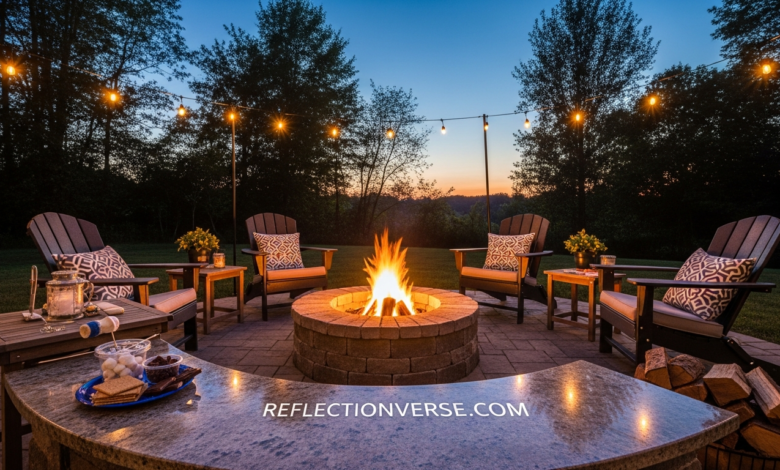
There’s something magical about gathering around a crackling fire on a cool evening. The warmth on your face, the dancing flames, the conversations that flow easier somehow. If you’ve been dreaming of adding this kind of atmosphere to your outdoor space, you’re in the right place. Backyard fire pit ideas come in endless varieties, from simple DIY projects to elaborate custom designs that become the centerpiece of your entire landscape.
The beauty of adding a fire pit to your backyard is that it extends your living space well beyond the walls of your home. You’re not just creating a place to burn wood. You’re building a gathering spot, a conversation starter, and a focal point that draws people together. Whether you have a sprawling yard or a compact patio, there’s a fire pit solution that can work for your space, budget, and style preferences.
Why Your Backyard Needs a Fire Pit
Let me start by saying that installing a fire pit was one of the best decisions I made for my outdoor space. Before that, my backyard sat empty most evenings. Now it’s where my family naturally gravitates after dinner.
Fire pits create an instant ambiance that no other outdoor feature can match. They provide warmth on chilly nights, extending your outdoor season by weeks or even months. You can roast marshmallows with kids, enjoy a glass of wine with friends, or simply sit alone with your thoughts and a good book.
Beyond the practical benefits, fire pits add significant value to your property. Outdoor living spaces are among the top features homebuyers look for. According to real estate experts, well-designed outdoor spaces can increase your home’s value by up to 20 percent. A thoughtfully placed fire pit becomes a selling point that sets your property apart.
The social aspect cannot be overstated either. Fire pits naturally encourage face to face interaction in ways that indoor spaces sometimes don’t. People arrange their chairs in a circle. Everyone faces each other. Phones get set aside. Real conversations happen.
In-Ground Fire Pit Designs
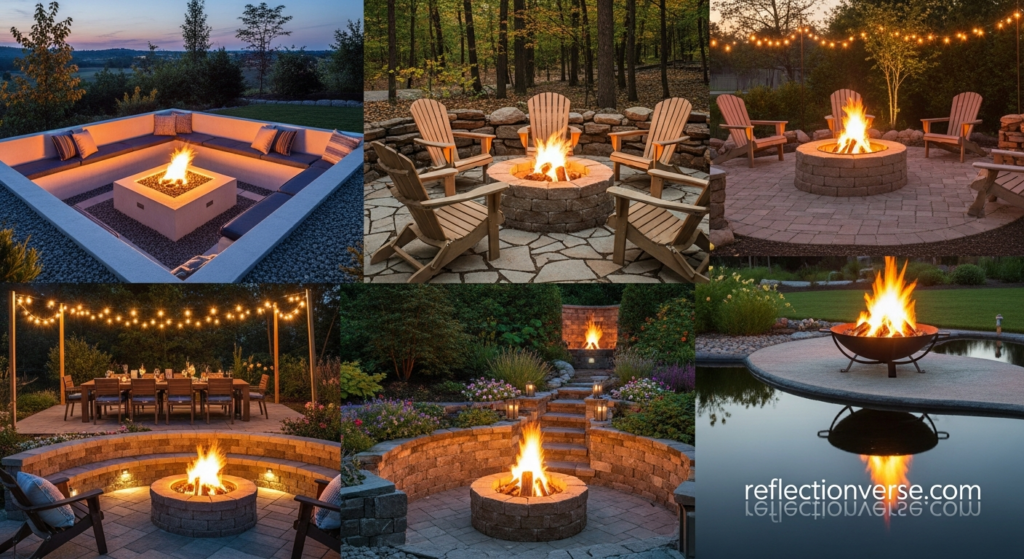
In-ground fire pits offer a sleek, permanent solution that integrates seamlessly into your landscape. These designs sit flush with your patio or lawn, creating a sophisticated look that feels intentional and polished.
Stone-Lined Sunken Pits
Stone-lined sunken fire pits are incredibly popular for good reason. They blend naturally with outdoor surroundings while providing excellent heat retention. You can use fieldstone, flagstone, or cut stone depending on your aesthetic preference.
The construction process involves excavating a circular or square area about two to three feet deep. You then line the walls with stone, leaving gaps for drainage and airflow. The result is a rustic, earthy feature that looks like it’s always been part of your landscape.
These work particularly well in sloped yards. You can build them into a hillside, creating natural seating areas around the perimeter. The elevation change adds visual interest while making the fire pit feel like a destination within your yard.
Concrete Bowl In-Ground Options
For a more modern approach, concrete bowl in-ground fire pits deliver clean lines and contemporary style. These typically feature smooth concrete walls that rise just a few inches above ground level.
The minimalist design works beautifully in modern landscapes. You can tint the concrete to match your home’s exterior or choose a contrasting color for dramatic effect. Some homeowners add decorative aggregates to the concrete mix for texture and visual interest.
Maintenance is straightforward with concrete options. The nonporous surface resists staining and cleans easily with soap and water. Unlike stone, concrete won’t shift or settle over time when properly installed.
Above-Ground Fire Pit Styles
Above-ground fire pits offer flexibility that in-ground options can’t match. You can move them, take them with you if you relocate, and change your outdoor layout without major reconstruction.
Metal Bowl Fire Pits
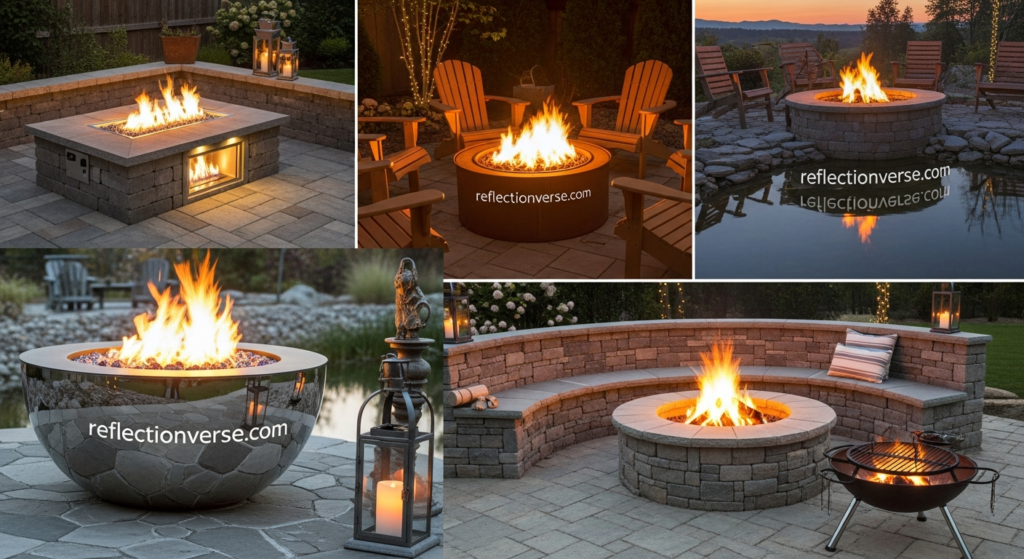
Metal bowl fire pits are the most versatile option available. They come in countless sizes, from compact 24-inch models perfect for small patios to massive 48-inch bowls that serve as dramatic focal points.
Steel fire pits develop a beautiful rust patina over time if left untreated. This weathered look appeals to many homeowners who appreciate the organic aesthetic. If you prefer a pristine appearance, powder-coated options resist rust and maintain their original color for years.
Cast iron bowls offer superior heat retention and durability. They’re heavier than steel, which provides stability in windy conditions. The classic look suits traditional homes and rustic landscapes particularly well.
Copper and Decorative Metal Designs
Copper fire pits bring warmth and elegance to outdoor spaces. The metal’s natural color complements both warm and cool color palettes. Over time, copper develops a gorgeous green patina that many people find appealing.
These decorative options often feature hammered finishes, intricate cutout patterns, or embossed designs. The craftsmanship turns a functional item into genuine outdoor art. When the fire burns, light filters through any cutouts, creating enchanting patterns on surrounding surfaces.
The investment is higher than basic steel bowls. However, copper’s longevity and timeless appeal make it worthwhile for many homeowners. With proper care, a quality copper fire pit can last decades.
Built-In Fire Pit Features
Built-in fire pits take outdoor living to the next level by integrating the fire feature with surrounding hardscape elements. These permanent installations require more planning and investment but deliver unmatched functionality and visual impact.
Fire Pit with Seating Walls
Combining your fire pit with built-in seating walls creates a complete outdoor room. Stone or brick walls curve around the fire pit at a comfortable distance. You can top the walls with flat capstones that provide seating and surface space for drinks and snacks.
This design eliminates the need for outdoor furniture around the fire. Everyone has a seat automatically. The walls also help block wind, making the space more comfortable and keeping smoke directed upward.
I’ve seen countless variations of this concept. Some incorporate planters into the wall design. Others include built-in storage compartments for firewood. The possibilities are limited only by your imagination and budget.
Patio Integration Concepts
Integrating a fire pit directly into your patio creates a seamless outdoor living space. The fire pit becomes part of the paving pattern rather than an add-on element.
Square or rectangular fire pits work especially well with geometric patio layouts. You can orient the patio stones in patterns that draw the eye toward the fire feature. Circular pits create a softer focal point and work beautifully with curved patio edges.
Consider the overall flow of your outdoor space during planning. Position the fire pit where it won’t block main traffic paths but still feels central to the gathering area. Most designers recommend placing it at least 10 feet from your house and any overhanging structures.
Gas Fire Pit Solutions
Gas fire pits have surged in popularity over recent years, and for good reason. They offer convenience that wood-burning options simply cannot match.
Propane Tank Fire Features
Propane fire pits are truly portable and require no permanent gas lines. You hide a standard propane tank inside the fire pit base or nearby cabinet. When you want a fire, you simply turn a knob or flip a switch.
The instant ignition means no struggling with kindling or waiting for logs to catch. You control the flame height precisely with a valve. When you’re ready to go inside, you shut it off immediately rather than waiting for embers to die down.
These work particularly well for smaller yards or rental properties. You’re not making permanent modifications to your landscape. If you move, the fire pit comes with you.
Natural Gas Fire Pit Options
Natural gas fire pits connect to your home’s gas line, providing unlimited fuel without tank swaps. This convenience factor is hard to beat. You never run out of gas mid-gathering or need to store backup tanks.
Installation requires professional gas line extension from your house to the fire pit location. This increases upfront costs significantly. However, natural gas typically costs less than propane over time, so you may recoup the installation expense.
The permanent nature of natural gas installations works best when you’ve settled on your ideal outdoor layout. Moving the fire pit later requires running a new gas line, which adds expense and complexity.
Creative DIY Fire Pit Projects
Building your own fire pit can be a rewarding weekend project that saves money while adding personal character to your space. Many backyard fire pit ideas are surprisingly achievable for DIYers with basic skills.
Concrete Block Fire Rings
Concrete block fire rings are the simplest DIY option. You can build a basic ring in an afternoon using materials from any home improvement store. Standard concrete blocks stack in a circle, creating walls that contain the fire safely.
For improved appearance, consider using retaining wall blocks instead of plain concrete. These feature textured faces and come in various colors. They also interlock for better stability.
The key is creating a level base and using fire-rated blocks that won’t crack from heat exposure. Some DIYers mortar the blocks together for permanence. Others dry-stack them for easier modification later.
Repurposed Material Ideas
Creative reuse projects result in truly unique fire pits with character you can’t buy. I’ve seen stunning examples made from old washing machine drums, tractor wheel rims, and even whiskey barrels reinforced with metal.
Metal fire rings made from repurposed materials develop beautiful patinas over time. Each burn adds to the character. The industrial aesthetic appeals to many homeowners, particularly in urban or modern settings.
Safety is paramount with repurposed projects. Ensure materials can handle high heat without releasing toxic fumes. Steel and cast iron work well. Avoid galvanized metal, which releases harmful zinc oxide when heated.
Fire Pit Shapes and Configurations
The shape of your fire pit affects both aesthetics and functionality. Different configurations suit different spaces and uses.
Round Fire Pits
Round fire pits are classic for good reason. The circular shape allows even heat distribution and encourages equal participation in conversations. Everyone sits at roughly the same distance from the flames.
Circles also create natural traffic flow around them. People instinctively walk around circular features rather than trying to cut through. This keeps the fire pit area safer and more organized during gatherings.
Round designs work in virtually any setting, from rustic to modern. The shape is timeless and versatile, making it a safe choice if you’re unsure about other aspects of your design.
Square and Rectangular Designs
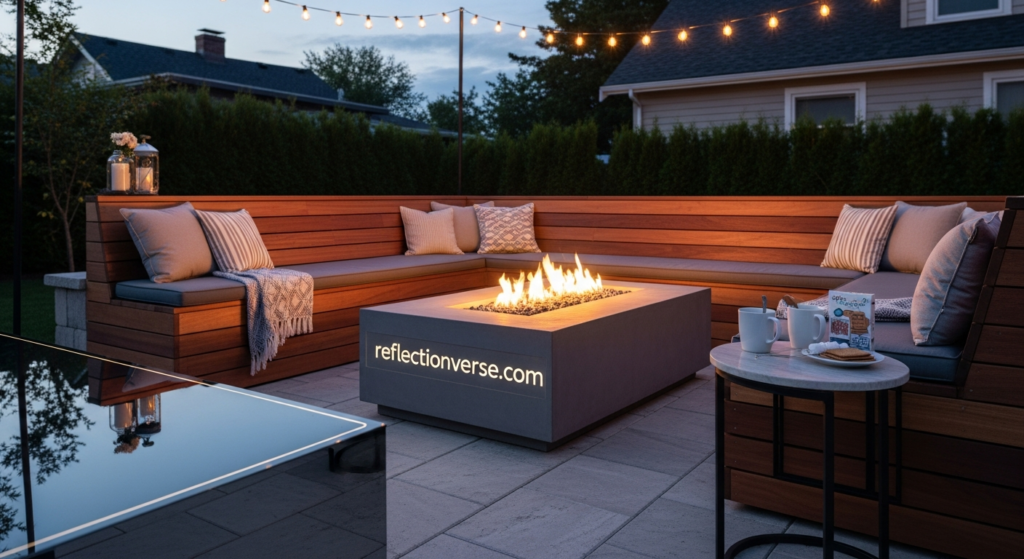
Square and rectangular fire pits suit modern and contemporary landscapes beautifully. The angular lines echo architectural elements of modern homes. They also fit more naturally against walls or in corners.
These shapes maximize seating in linear arrangements. If your patio has a long, narrow configuration, a rectangular fire pit can serve more people than a round one of similar size.
The straight edges also simplify construction for DIY projects. Laying rectangular pavers or cutting straight stone is easier than working with curves.
Linear Fire Features
Linear fire features stretch several feet in length with narrow depth. These dramatic installations create walls of flame that serve as striking visual dividers in outdoor spaces.
You might install a linear fire feature along a patio edge, separating the entertainment area from the rest of the yard. The extended flame line provides ambiance without taking up much space depth-wise.
Most linear features run on gas for practical flame control across the extended burner. The clean-burning fuel prevents smoke from overwhelming the area, which is important given the large flame surface.
Fire Pit Surroundings and Landscaping
The area around your fire pit matters as much as the pit itself. Thoughtful landscaping and hardscaping tie everything together into a cohesive outdoor space.
Heat-Tolerant Plant Selections
Plants near fire pits must tolerate heat and occasional smoke exposure. Choose species that naturally thrive in hot, dry conditions.
Succulents work beautifully around fire pits. Varieties like agave, aloe, and sedum handle heat well and add sculptural interest. Ornamental grasses provide movement and texture while tolerating heat stress better than most plants.
Keep plants at least three to five feet from the fire pit edge. This protects them from excessive heat while reducing fire hazards. Never plant overhanging branches above or near a fire pit, regardless of species.
Ground Cover and Safety Zones
The ground immediately around your fire pit needs special consideration for safety and aesthetics. Create a noncombustible zone extending at least three feet in all directions.
Gravel is an excellent, affordable option. It won’t catch fire, drains well, and comes in many colors and sizes. You can create attractive patterns using different gravel types for visual interest.
Pavers, flagstone, or concrete also work well. These solid surfaces make it easier to move chairs and tables around the fire pit. They also prevent weeds from growing up near the fire feature.
Lighting and Ambiance Enhancement
Strategic lighting transforms your fire pit area from nice to magical after dark. Layer different light sources for the best effect.
Pathway and Accent Lighting
Path lights guide guests safely to your fire pit area while creating ambiance. Solar options are easy to install and eco-friendly. LED fixtures last for years and use minimal electricity.
Accent lights highlight surrounding landscape features. Uplight interesting trees or architectural elements. Downlight from overhead structures to create moonlight effects. The fire provides central illumination, while strategic accent lighting adds depth and dimension.
Consider the light color temperature carefully. Warm white bulbs complement fire glow beautifully. Cool white can appear harsh and clinical next to warm flames.
String Lights and Overhead Elements
String lights overhead create enchanting atmosphere while providing functional illumination. Edison-style bulbs offer vintage charm, while globe lights feel more modern and festive.
Hang strings from posts, pergolas, or trees surrounding your fire pit area. Create patterns or shapes with the light strings rather than just straight lines. Swags and scallops add visual interest and make the space feel more designed.
The soft overhead glow from string lights reduces harsh shadows and makes faces visible across the fire. This improves conversation quality and helps create the warm, welcoming atmosphere you want.
Fire Pit Safety Considerations
Safety should never be an afterthought when planning your fire pit. Proper precautions protect your property and loved ones.
Placement and Clearance Requirements
Most building codes require fire pits to sit at least 10 feet from structures, property lines, and low-hanging branches. Some jurisdictions have stricter rules. Check local regulations before finalizing your fire pit location.
Consider prevailing wind patterns in your yard. Position the fire pit where smoke naturally blows away from your house and seating areas. You might need to observe your yard over several days to identify the best spot.
Keep a fire extinguisher or water hose readily accessible near your fire pit. You hope to never need it, but preparedness is crucial. Make sure all guests know where emergency supplies are located.
Fire Safety Equipment
Beyond a fire extinguisher and hose, consider keeping a spark screen on hand for windy evenings. These mesh covers allow you to enjoy the fire while preventing embers from escaping.
A metal poker or fire stick helps you safely rearrange logs without reaching into the flames. Long fireplace matches or a long lighter ignites fires without singeing arm hair.
Keep a metal bucket filled with sand near the fire pit. Sand smothers flames effectively and provides an alternative if water isn’t immediately available.
Conclusion
Creating the perfect outdoor fire pit involves balancing aesthetics, functionality, and safety. Whether you choose an in-ground stone masterpiece, a portable metal bowl, or a convenient gas-powered feature, the right fire pit transforms your backyard into a destination.
The backyard fire pit ideas we’ve explored offer something for every style, space, and budget. Start by considering how you’ll use your fire pit most often. Will it host large gatherings or intimate family evenings? Do you want low maintenance convenience or the traditional experience of tending a wood fire?
Take your time with planning and placement. A well-positioned, thoughtfully designed fire pit becomes a cherished part of your home for years to come. It’s where memories get made, where conversations flow freely, and where you’ll find yourself drawn evening after evening.
What kind of fire pit speaks to your style and needs? The perfect option is out there waiting to warm your backyard and your gatherings.
Frequently Asked Questions
How much does it cost to install a backyard fire pit?
Costs range dramatically based on your choices. Simple DIY projects using concrete blocks might cost $100 to $300. Prefabricated bowls run $200 to $1,000. Custom built-in features with professional installation can range from $3,000 to $10,000 or more. Gas line installation adds $500 to $2,000 for natural gas fire pits.
Do I need a permit to build a fire pit?
Many municipalities require permits for permanent fire pits. Portable fire pits typically don’t need permits. Requirements vary significantly by location. Contact your local building department before starting any fire pit project. Some homeowners associations also have specific rules about fire features.
How far should a fire pit be from my house?
Most building codes require a minimum distance of 10 feet between fire pits and structures. This includes your house, garage, shed, and fences. Some areas mandate 15 or even 25 feet. Always check local regulations. Also consider overhead clearance from eaves, branches, and power lines.
Are gas fire pits safer than wood-burning ones?
Gas fire pits eliminate flying sparks and embers, which reduces certain fire risks. They also shut off instantly when you’re done. However, both types are safe when properly installed and used responsibly. Gas pits carry risks related to gas leaks if not maintained properly. Wood pits require careful ember management.
What’s the best material for a fire pit?
Steel and cast iron are excellent for portable fire pits. They handle heat well and last for years. Stone and concrete work beautifully for permanent installations. They retain heat and integrate naturally into landscapes. Gas fire pits often combine stone or concrete exteriors with metal burner components. Choose materials based on your style and whether you want a permanent or movable feature.
Can I use my fire pit year-round?
Yes, fire pits work in all seasons when safely managed. Winter fires are especially cozy and help you enjoy outdoor spaces during colder months. However, check local burning ordinances. Some areas restrict outdoor fires during dry seasons. Snow and rain don’t prevent fire pit use, though you may need to clear the pit before lighting.
How do I maintain my fire pit?
Remove ashes regularly from wood-burning pits once they’ve cooled completely. Brush off debris and check for cracks in stone or concrete annually. Metal fire pits benefit from covers when not in use. Gas burners need occasional cleaning to remove cobwebs and debris. Check gas connections yearly for leaks using soapy water. Store portable fire pits in a garage or shed during winter in harsh climates.
What wood should I burn in my fire pit?
Hardwoods like oak, maple, hickory, and ash burn cleanest with minimal smoke and sparking. They also produce good heat and long-lasting coals. Avoid softwoods like pine, which spark excessively and create creosote buildup. Never burn treated lumber, painted wood, or construction scraps. These release toxic chemicals when burned.
also read reflectionverse.com
