
How Long Is a Marathon: The Ultimate Truth About This Brutal 26.2-Mile Challenge

Introduction
You’ve probably heard someone say they’re “training for a marathon” and felt a mix of awe and curiosity. Maybe you’ve wondered what makes this distance so special, or why runners obsess over those exact 26.2 miles.
Here’s the thing: understanding how long is a marathon goes beyond just knowing a number. It’s about grasping what that distance really means for your body, your training, and your life. Whether you’re considering your first marathon or just curious about this iconic race distance, you’re in the right place.
In this article, we’ll break down everything about marathon distance. You’ll learn the exact measurement, the fascinating history behind it, how it compares to other races, and what running that distance actually feels like. We’ll also cover training expectations, common questions, and practical tips to help you understand this bucket-list challenge.
How Long Is a Marathon? The Exact Distance
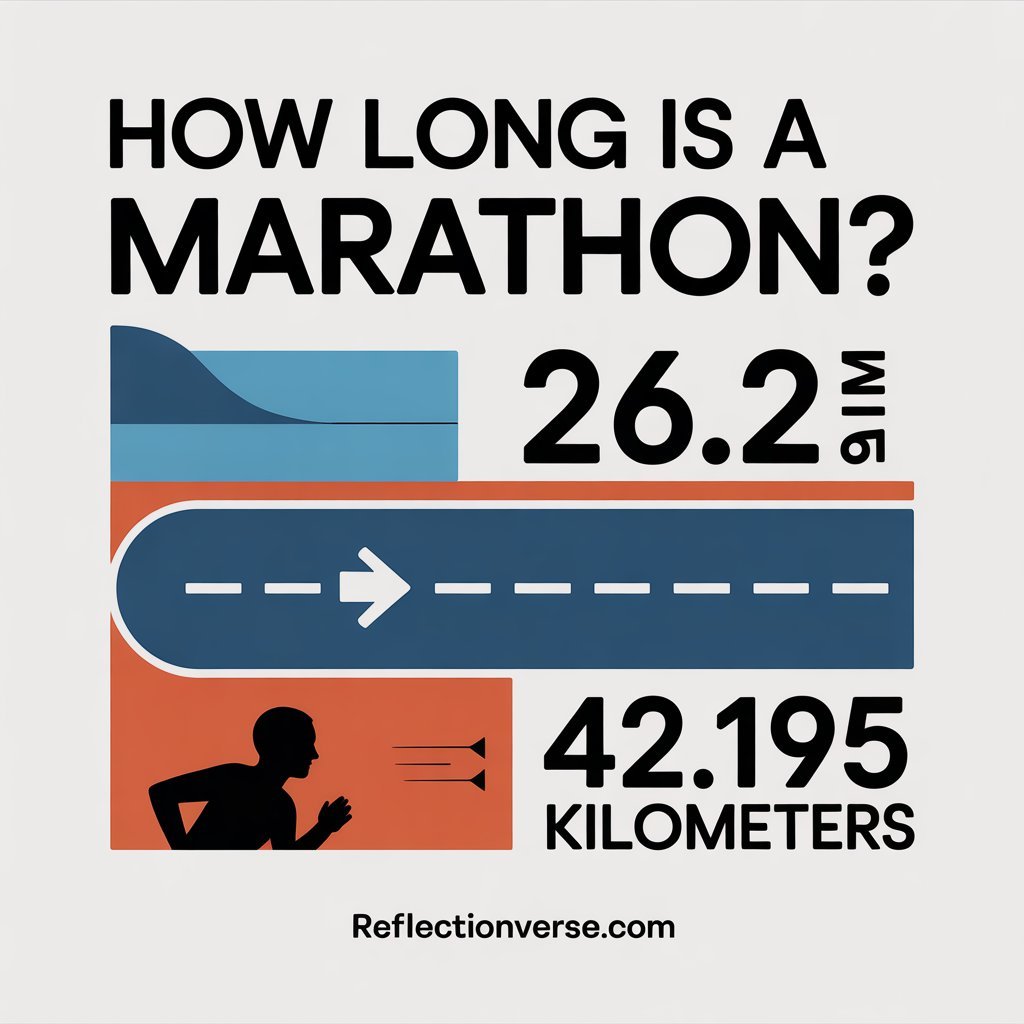
Let’s start with the straightforward answer. A marathon is exactly 26.2 miles or 42.195 kilometers. This distance is standardized worldwide, meaning whether you run the Boston Marathon, the London Marathon, or a small local race, you’ll cover the same ground.
That 0.2 at the end matters more than you might think. It represents an additional 385 yards beyond 26 miles. Without it, the race wouldn’t officially be a marathon.
The distance breaks down to:
- 26 miles and 385 yards
- 42 kilometers and 195 meters
- Approximately 46,145 steps for the average person
- About 138 football fields laid end to end
Most runners complete this distance in 3 to 6 hours. Elite athletes finish in just over 2 hours, while recreational runners often take 4 to 5 hours. Walking a marathon typically takes 6 to 8 hours.
The Fascinating History Behind the Marathon Distance
The marathon distance has a story that’s almost as epic as the race itself. It all started with an ancient Greek legend. According to the tale, a messenger named Pheidippides ran from the battlefield of Marathon to Athens to announce victory over the Persians in 490 BCE. The distance was roughly 25 miles, and legend says he collapsed after delivering the message.
When the modern Olympic Games began in 1896, organizers wanted to honor this story. The first Olympic marathon ran from Marathon to Athens, covering about 25 miles. But here’s where it gets interesting: the distance wasn’t standardized yet.
Early Olympic marathons varied in length. The 1900 Paris Olympics had a 25-mile course. The 1904 St. Louis Olympics measured about 24.85 miles. Different races, different distances.
The specific 26.2-mile distance came from the 1908 London Olympics. The royal family wanted the race to start at Windsor Castle and finish in front of the royal box at the Olympic Stadium. This route measured exactly 26 miles and 385 yards. The distance stuck, and in 1921, this became the official standard.
So technically, we all have British royalty to thank (or blame) for those extra 385 yards.
Why 26.2 Miles? Breaking Down the Science
You might wonder what makes 26.2 miles the perfect marathon distance. The truth is, there’s nothing biologically “perfect” about it. The distance is purely historical, not physiological.
That said, 26.2 miles represents a significant physical and mental challenge. Your body stores enough glycogen (carbohydrate fuel) to run about 18 to 20 miles at marathon pace. Beyond that point, often called “hitting the wall,” your body must tap into fat stores for energy. This transition is uncomfortable and requires both physical preparation and mental toughness.
The distance also takes most people 3 to 5 hours to complete. This duration pushes your cardiovascular system, muscles, and joints in ways that shorter races don’t. It’s long enough to be genuinely difficult, but short enough that dedicated training makes it achievable for most healthy adults.
Research shows that training for and completing a marathon can:
- Improve cardiovascular health significantly
- Build mental resilience and confidence
- Reduce your “vascular age” by about 4 years
- Strengthen bones and connective tissues
The 26.2-mile distance sits in a sweet spot. It’s challenging enough to require serious commitment, but accessible enough that thousands of everyday people complete marathons every year.
How Does Marathon Distance Compare to Other Races?
Understanding how long is a marathon becomes clearer when you compare it to other common race distances. Here’s how it stacks up:
5K (3.1 miles): This is the most beginner-friendly distance. Most people can complete it with minimal training. It takes about 8.5 5Ks to equal one marathon.
10K (6.2 miles): A popular intermediate distance that requires more endurance than a 5K. You’d need to run more than four 10Ks to match marathon distance.
Half Marathon (13.1 miles): Exactly half the marathon distance, as the name suggests. Many runners start here before attempting a full marathon. The training is substantial but less demanding than full marathon prep.
30K (18.6 miles): Not a common race distance in the US, but popular in some countries. It gives runners a taste of marathon fatigue without the full distance.
Ultra Marathon (anything beyond 26.2 miles): These races push past marathon distance, sometimes reaching 50 miles, 100 miles, or even multi-day events. They require different training strategies and mental approaches.
The jump from half marathon to full marathon isn’t just about doubling the distance. The physiological demands increase exponentially. Those last 6 to 8 miles of a marathon feel much harder than the first 18 to 20.
What Running 26.2 Miles Actually Feels Like
Let me be honest with you: running a marathon is hard. Really hard. But it’s also incredible.
The first few miles usually feel easy, almost too easy. Your adrenaline is pumping, the crowd is cheering, and you feel invincible. Many first-time marathoners make the mistake of starting too fast during this phase.
Miles 6 through 15 typically feel comfortable. You’ve settled into your pace, your breathing is steady, and you’re enjoying the experience. This is often called the “comfort zone” of the marathon.
Around mile 18 to 20, things change. Your glycogen stores start depleting. Your legs feel heavier. Mental doubts creep in. This is where the real marathon begins. Some runners call it “hitting the wall,” and it’s very real.
The last 10K (6.2 miles) tests everything you’ve got. Your body is fatigued in ways you’ve never experienced. But here’s the beautiful part: this is where your training and mental strength carry you. Every step forward is a victory.
Crossing that finish line at 26.2 miles creates an emotional high that’s hard to describe. The physical exhaustion combines with overwhelming pride and accomplishment. Many runners cry, laugh, or simply stand in disbelief.
The day after? You’ll feel it. Expect soreness, stiffness, and a newfound respect for stairs. But that finisher’s medal makes it all worthwhile.
How Long Does It Take to Train for 26.2 Miles?
Training for a marathon typically requires 16 to 20 weeks of consistent preparation. This assumes you already have a decent running base (comfortably running 3 to 4 times per week for several months).
Complete beginners should spend 2 to 3 months building a foundation before starting a formal marathon training plan. This means gradually increasing to the point where you can run 3 to 4 miles comfortably.
A typical training week includes:
- 3 to 5 runs per week
- One long run (gradually building to 18 to 22 miles)
- Easy recovery runs
- One or two quality workouts (tempo runs, intervals, or hills)
- Rest days for recovery
- Cross-training (optional but beneficial)
Your weekly mileage builds progressively. Early weeks might total 20 to 25 miles, while peak training weeks often reach 40 to 50 miles for recreational runners. Elite athletes run much higher volumes, sometimes exceeding 100 miles per week.
The long run is the cornerstone of marathon training. It teaches your body to run on tired legs and helps you practice fueling strategies. These runs gradually extend from 8 to 10 miles to 18 to 22 miles over the training cycle.
Most plans don’t have you run the full 26.2 miles before race day. The longest training run typically maxes out at 20 to 22 miles. This protects you from injury while still preparing your body for the full distance.
Common Challenges When Covering 26.2 Miles
Running marathon distance comes with predictable challenges. Knowing them ahead helps you prepare better.
The Wall: This phenomenon typically hits between miles 18 and 22. Your glycogen depletes, and your pace slows dramatically. Proper training and race-day fueling help minimize this effect.
Blisters and Chafing: Over 26.2 miles, small friction points become big problems. Test your race-day outfit and shoes during long training runs. Apply anti-chafe products liberally.
Bathroom Issues: Let’s be real about this. Many runners experience stomach problems during marathons. The constant jostling, combined with pre-race nerves and mid-race fueling, can upset your digestive system. Know where porta-potties are located on the course.
Mental Fatigue: Your mind gets tired before your body does sometimes. The mental game becomes crucial, especially in the later miles. Break the race into smaller segments and focus on reaching the next mile marker.
Weather Factors: You’re outside for 3 to 5 hours, exposed to whatever Mother Nature delivers. Heat, cold, rain, and wind all impact your performance and comfort. Train in various conditions when possible.
Pacing Errors: Starting too fast is the number one mistake marathoners make. Those early miles feel deceptively easy, but you’ll pay for overexuberance later. Stick to your planned pace, even when it feels slow.
Practical Tips for Conquering 26.2 Miles
Whether you’re planning to run your first marathon or looking to improve your time, these tips will help.
Start with Shorter Races: Build experience with 5Ks, 10Ks, and half marathons before tackling the full distance. These races teach you about pacing, fueling, and race-day logistics without the marathon’s intensity.
Follow a Structured Plan: Don’t wing it. Choose a training plan that matches your current fitness level and time commitment. Popular options include Hal Higdon, Runner’s World, and Jack Daniels plans.
Practice Your Fueling Strategy: Your body needs 30 to 60 grams of carbohydrates per hour during the race. Experiment with gels, chews, sports drinks, or real food during long training runs. Never try something new on race day.
Invest in Proper Shoes: Get fitted at a specialty running store. Your shoes will carry you 26.2 miles, so they matter. Replace them every 300 to 500 miles.
Listen to Your Body: Pain is your body’s warning system. Address small issues before they become big problems. Rest days aren’t optional; they’re when your body adapts and gets stronger.
Taper Properly: The final 2 to 3 weeks before race day, you’ll reduce your mileage significantly. This feels counterintuitive, but it allows your body to arrive at the start line fresh and strong. Trust the taper.
Set Realistic Goals: Your first marathon goal should be to finish healthy and happy. Time goals can come later. Many experienced coaches suggest adding 20 to 30 minutes to double your half marathon time as a conservative full marathon estimate.
Prepare Mentally: Physical training is only part of the equation. Visualize yourself succeeding. Develop mantras for tough moments. Remember your “why” for running this race.
The Marathon Distance Around the World
Every year, millions of runners tackle 26.2 miles across thousands of marathons worldwide. Some have become legendary.
The Boston Marathon, established in 1897, is the world’s oldest annual marathon. It requires qualifying times, making it a bucket-list goal for many serious runners.
The New York City Marathon takes runners through all five boroughs, with incredible crowd support every step of the way. Over 50,000 participants make it one of the largest marathons globally.
The London Marathon combines world-class competition with charity fundraising. Most participants run for charitable causes, raising millions annually.
The Berlin Marathon is known for fast times. Its flat course and ideal fall weather have produced numerous world records.
The Tokyo Marathon showcases Japanese organization and enthusiasm. Despite challenging hilly sections, runners rave about the experience and support.
Virtual marathons gained popularity recently, allowing runners to complete 26.2 miles on their own schedule and route. While different from traditional races, they proved that the distance itself holds meaning regardless of location.
Is 26.2 Miles Right for You?
Not everyone needs to run a marathon, and that’s perfectly okay. The distance requires significant time, energy, and commitment.
Consider a marathon if:
- You enjoy running and want a major challenge
- You have 4 to 5 months for proper training
- You’re injury-free and healthy enough for intense training
- You’re motivated by big goals and achievements
- You understand the time commitment required
Think twice if:
- You’re dealing with ongoing injuries
- You don’t genuinely enjoy running
- Your schedule doesn’t allow consistent training
- You’re only doing it to prove something to others
Remember, half marathons, 10Ks, and 5Ks are legitimate accomplishments too. Shorter distances can be just as rewarding without the same training demands. Some runners prefer racing shorter distances faster rather than grinding through 26.2 miles.
There’s no shame in choosing a different distance. Running should enhance your life, not dominate it to the point of stress and injury.
Conclusion
So, how long is a marathon? It’s 26.2 miles of challenge, triumph, struggle, and joy. It’s a distance that pushes you beyond what you thought possible while remaining achievable with dedication and smart training.
The marathon isn’t just about the numbers on your watch or the medal around your neck. It’s about the journey, the training runs in all weather, the doubts you overcome, and the person you become through the process.
Whether you decide to tackle this distance or cheer from the sidelines, you now understand what makes 26.2 miles so special. It’s not just a race. It’s a test of human will and determination that has inspired millions around the world.
Are you ready to take on 26.2 miles? What’s holding you back, or what’s driving you forward? Your marathon journey might be closer than you think.
FAQs
How long is a marathon in miles and kilometers? A marathon is exactly 26.2 miles or 42.195 kilometers. This distance is standardized worldwide for all official marathon races.
Why is a marathon 26.2 miles instead of 26 miles? The distance comes from the 1908 London Olympics, where the race started at Windsor Castle and finished at the Olympic Stadium’s royal box. This specific route measured 26 miles and 385 yards, which became the official standard in 1921.
How long does it take to run a marathon? Most recreational runners finish in 4 to 5 hours. Elite athletes complete marathons in just over 2 hours, while walkers typically take 6 to 8 hours. Your finishing time depends on fitness level, training, and race conditions.
Do I need to run 26.2 miles during training? No, most training plans cap long runs at 20 to 22 miles. Running the full distance before race day increases injury risk without providing significant additional benefits. Your training prepares you to cover those final miles on race day.
How many steps are in a marathon? The average person takes approximately 46,000 to 50,000 steps to complete a marathon. This varies based on height, stride length, and running efficiency. Taller runners with longer strides take fewer steps.
What is the difference between a marathon and a half marathon? A half marathon is 13.1 miles, exactly half the marathon distance. However, the training and physical demands don’t scale linearly. A full marathon is significantly harder than running two half marathons back to back.
Can beginners run a marathon? Yes, healthy beginners can train for and complete marathons with proper preparation. Plan for 16 to 20 weeks of structured training after building a basic running foundation. Many successful marathoners started as complete beginners.
What percentage of people have run a marathon? Less than 1% of the global population has completed a marathon. In the United States, estimates suggest around 0.5% to 1% of Americans have finished the 26.2-mile distance, making it a genuine accomplishment.
How should I fuel during a marathon? Plan to consume 30 to 60 grams of carbohydrates per hour during the race. Most runners use energy gels, chews, or sports drinks. Practice your fueling strategy during long training runs to avoid stomach issues on race day.
What is “hitting the wall” in a marathon? “Hitting the wall” typically occurs around miles 18 to 22 when your body depletes its glycogen stores. Runners experience sudden fatigue, heavy legs, and significantly slower pace. Proper training and race-day fueling help minimiz.
Also read reflectionverse.com
